Teacher Demonstration
Use the live model as a shared screen demonstration before students try their own predictions and observations.
Open Decomposition Of Vector Advance Model, an interactive HTML5 learning activity for Measurement.
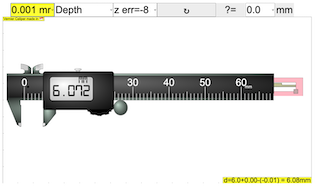
Use the live model as a shared screen demonstration before students try their own predictions and observations.
Open the simulation, adjust the controls, and compare what changes on screen before answering the concept-check questions.
Which scale gives the coarse reading, which scale gives the fine reading, and how do you combine them?
Locate the main scale mark immediately before the Vernier zero.
Look for the Vernier division that lines up most closely with a main scale mark.
Multiply the aligned Vernier division by the least count, then add it to the main scale reading.
State the value with unit, sensible precision, and any zero-error correction if shown.
Use this as a deliberate reading routine rather than a speed exercise. Ask students to say the main scale reading, Vernier alignment, least count, and final measurement separately.
Ask: Why do we read just before the Vernier zero? Which mark is truly aligned? What changes if the instrument has zero error?
Show one borderline alignment and ask students to justify the chosen mark. This targets the common error of reading the largest visible number instead of the scale alignment.
These questions are generated from the topic and the concept illustrated by the simulation. Use them after students have explored the model.
Correct first attempts build a streak and unlock higher point multipliers on this device.
1. What is the first reading to take on a Vernier caliper?
2. What does the Vernier scale add to the measurement?
3. Why is zero error important?
4. What should a final caliper reading include?
5. Which habit reduces reading errors?
Anonymous activity counts show that this resource is being discovered and used.