Teacher Demonstration
Use the live model as a shared screen demonstration before students try their own predictions and observations.
Open Example 9 (J 89/II/2), an interactive HTML5 learning activity for mechanics.
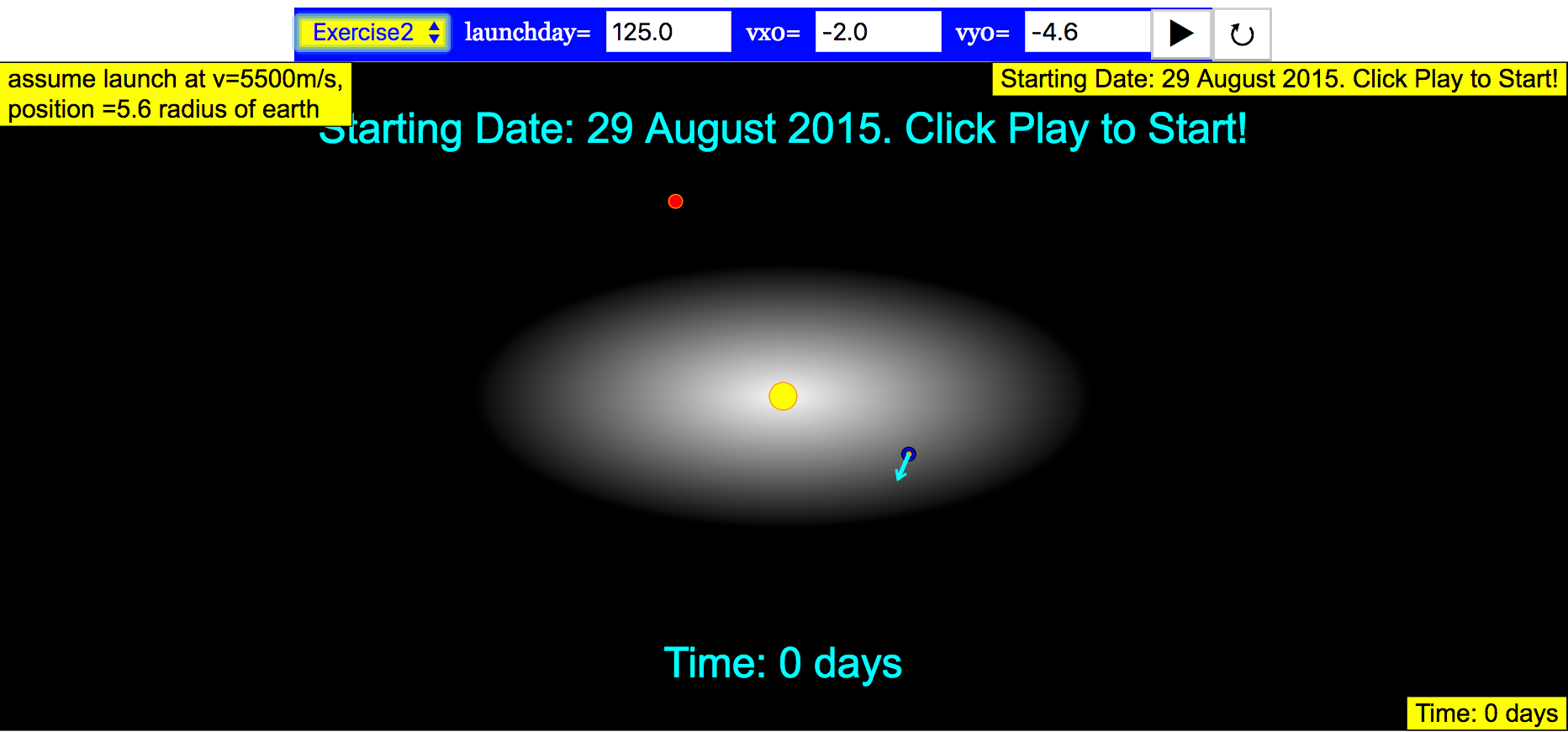
Use the live model as a shared screen demonstration before students try their own predictions and observations.
Open the simulation, adjust the controls, and compare what changes on screen before answering the concept-check questions.
If speed is constant, why is the object still accelerating?
Pause or inspect the motion and identify the instantaneous velocity direction.
Identify the direction from the object to the centre of the circular path.
Compare how the required centripetal force changes.
Use velocity direction change to explain centripetal acceleration.
Use this to address the misconception that constant speed means no acceleration.
Ask: Where does resultant force point? What would happen if that force disappeared?
Have students draw tangent velocity arrows and inward acceleration arrows at several positions.
These questions are generated from the topic and the concept illustrated by the simulation. Use them after students have explored the model.
Correct first attempts build a streak and unlock higher point multipliers on this device.
1. In uniform circular motion, where does centripetal acceleration point?
2. Why can an object accelerate while its speed is constant?
3. What happens to required centripetal force if speed increases at the same radius?
4. What is the velocity direction at an instant in circular motion?
5. What would happen if the inward resultant force vanished?
Anonymous activity counts show that this resource is being discovered and used.