Breadcrumbs
-
You are here:
-
Home

-
Events/Workshop/Talks
-
20121201 Interactive Workshop ICCE2012 Designing Open Source Computer Models for Physics by Inquiry using Easy Java Simulation
update: photo gallery
 |
| Easy Java Simulation Workshop by Prof Hwang @RVHS Singapore 22 March 2013. photo by lookang |
 |
| Easy Java Simulation Workshop by Prof Hwang @RVHS Singapore 22 March 2013 photo by lookang |
 |
| Easy Java Simulation Workshop by Prof Hwang @RVHS Singapore 22 March 2013 photo by lookang |
 |
| Easy Java Simulation Workshop by Prof Hwang @RVHS Singapore 22 March 2013 photo by lookang |
 |
| Easy Java Simulation Workshop by Prof Hwang @RVHS Singapore 22 March 2013 photo by lookang |
 |
| Easy Java Simulation Workshop by Prof Hwang @RVHS Singapore 22 March 2013 photo by lookang |
 |
| Easy Java Simulation Workshop by Prof Hwang @RVHS Singapore 22 March 2013 photo by weeboon |
 |
| Easy Java Simulation Workshop by Prof Hwang @RVHS Singapore 22 March 2013 photo by weeboon |
 |
| Easy Java Simulation Workshop by Prof Hwang @RVHS Singapore 22 March 2013 photo by weeboon |
 |
| Easy Java Simulation Workshop by Prof Hwang @RVHS Singapore 22 March 2013 photo by weeboon |
 |
| Easy Java Simulation Workshop by Prof Hwang @RVHS Singapore 22 March 2013 photo by weeboon |
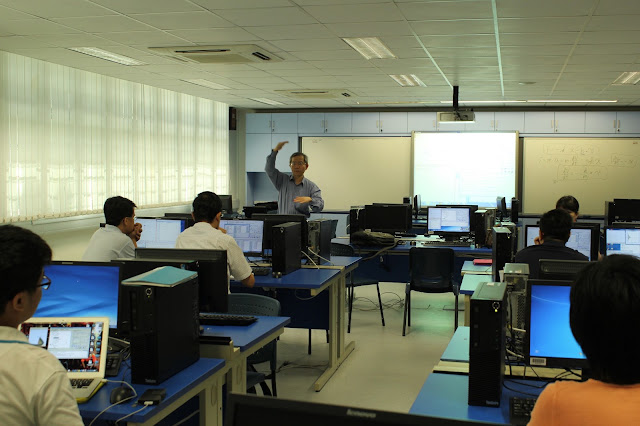 |
| Easy Java Simulation Workshop by Prof Hwang @RVHS Singapore 22 March 2013 photo by weeboon |
 |
| Easy Java Simulation Workshop by Prof Hwang @RVHS Singapore 22 March 2013 photo by weeboon |
 |
| Easy Java Simulation Workshop by Prof Hwang @RVHS Singapore 22 March 2013 photo by weeboon |
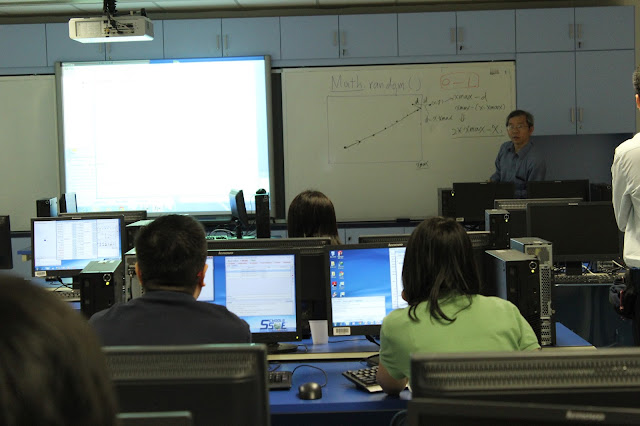 |
| Easy Java Simulation Workshop by Prof Hwang @RVHS Singapore 22 March 2013 photo by weeboon |
 |
| Easy Java Simulation Workshop by Prof Hwang @RVHS Singapore 22 March 2013 photo by weeboon |
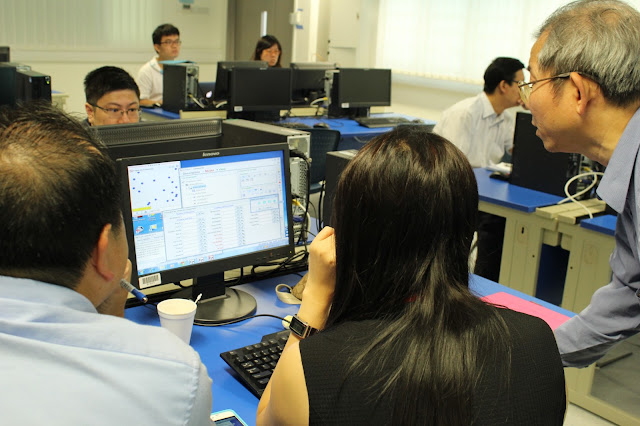 |
| Easy Java Simulation Workshop by Prof Hwang @RVHS Singapore 22 March 2013 photo by weeboon |
 |
| Easy Java Simulation Workshop by Prof Hwang @RVHS Singapore 22 March 2013 photo by weeboon |
 |
| Easy Java Simulation Workshop by Prof Hwang @RVHS Singapore 22 March 2013 photo by weeboon |
 |
| Easy Java Simulation Workshop by Prof Hwang @RVHS Singapore 22 March 2013 photo by weeboon |
 |
| Easy Java Simulation Workshop by Prof Hwang @RVHS Singapore 22 March 2013 photo by weeboon |
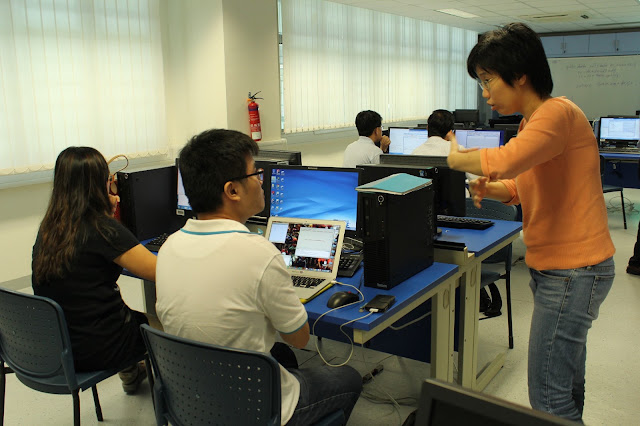 |
| Easy Java Simulation Workshop by Prof Hwang @RVHS Singapore 22 March 2013 photo by weeboon |
 |
| Easy Java Simulation Workshop by Prof Hwang @RVHS Singapore 22 March 2013 photo by weeboon |
 |
| Easy Java Simulation Workshop by Prof Hwang @RVHS Singapore 22 March 2013 photo by weeboon |
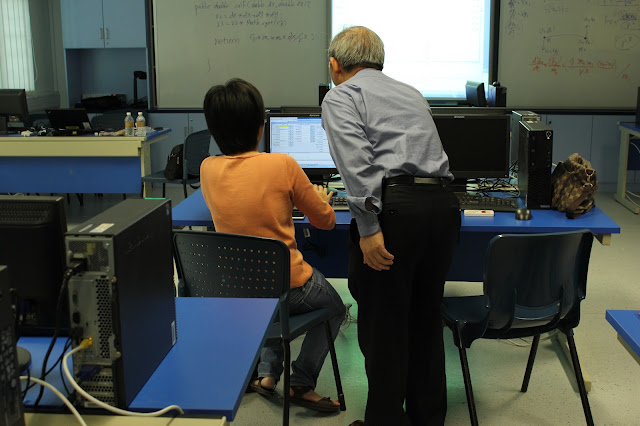 |
| Easy Java Simulation Workshop by Prof Hwang @RVHS Singapore 22 March 2013 photo by weeboon |
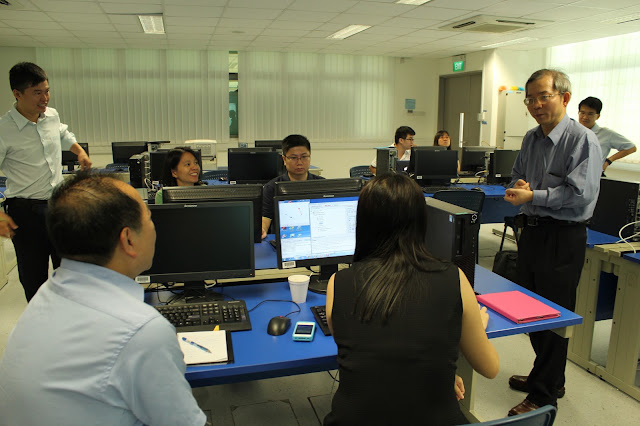 |
| Easy Java Simulation Workshop by Prof Hwang @RVHS Singapore 22 March 2013 photo by weeboon |
FAQ: Open Educational Resources and Physics Simulations
- What is Easy Java Simulation (EJS) and what is its role in this project?
- Easy Java Simulation (EJS) is a modeling tool used to create interactive physics simulations that can be embedded in web pages. It allows users to view the physics models behind simulations, modify existing models, or create new ones from scratch. This makes it a central tool for developing and sharing educational simulations of physics concepts in the Open Educational Resources project.
- What types of educational resources are available within this initiative?
- The initiative offers a wide variety of interactive resources including simulations for physics, mathematics, and other sciences. Specifically, there are simulations for topics including whole numbers, mechanics (motion, forces, energy), waves, optics, electromagnetism, thermodynamics and more. These resources are designed for various levels, from primary school to junior college, and include not just simulations, but also activities and guides. The resources also incorporate Tracker, a video analysis tool, to enhance experimentation and modeling opportunities.
- Who is Professor Fu-Kwun Hwang and what was his involvement?
- Professor Fu-Kwun Hwang, from the Department of Physics at National Taiwan Normal University, is an instructor who conducted a workshop on designing and creating physics simulations using Easy Java Simulation. His workshop aimed to teach educators how to use EJS effectively for conceptual learning in physics.
- What is the goal of using simulations in education according to this resource?
- The main goal is to enhance conceptual learning by allowing students to interact with simulations that visualize physics concepts. Students are given the opportunity to not only observe phenomena, but also to explore underlying models, encouraging a deeper and more intuitive understanding of complex topics. The use of these simulations supports active learning where they can manipulate variables and observe the effects directly.
- What are some specific examples of physics concepts that are covered by simulations in this collection?
- The simulations encompass a range of topics, including but not limited to: gravity, projectile motion, Hooke's law, simple harmonic motion, wave interference and diffraction, Kepler's laws, nuclear decay, and optics. There are also models of various mechanical systems such as pendulums, springs, and collisions.
- What tools other than EJS are used in creating resources and simulations?
- Besides EJS, the project utilizes Tracker, a video analysis and modeling tool for incorporating real-world video clips into simulations. The resources are presented as Javascript HTML5 Applets and many leverage GeoGebra, Phet, and other platforms. There's an emphasis on developing interactive web-based tools that are accessible on multiple devices, including desktops, tablets, and smartphones.
- What does the mention of "Open Educational Resources" (OER) mean in the context of this project?
- The "Open Educational Resources" label means that the materials are freely available for educational use, adaptation, and distribution. The project is licensed under a Creative Commons Attribution-Share Alike 4.0 Singapore license. This promotes the sharing, remixing, and expansion of teaching materials without the traditional restrictions of copyright, encouraging collaboration and community contributions to education.
- Who is the target audience for these resources?
- The target audience is broad, including teachers and students from primary school through junior college. The materials and simulations are designed to support teaching and learning in a variety of subject areas and are adaptable to diverse learning needs and educational environments. There is also a focus on professional development for teachers through workshops and the development of teacher-created resources.
{source}
<div class="adsense-wrap adsense-wrap--article">
<ins class="adsbygoogle"
style="display:block; text-align:center;"
data-ad-layout="in-article"
data-ad-format="fluid"
data-ad-client="ca-pub-0121577198857509"
data-ad-slot="3929276372"></ins>
<script>(adsbygoogle = window.adsbygoogle || []).push({});</script>
</div>
{/source}


