{source}
<?php  require_once JPATH_SITE.'/TTcustom/TT_contentparser.php';\(parameters = array("topicname" => "math", "modelname" => "ejss_model_astoundingly_average");echo generateSimHTML(\)parameters, "EJSS");
?>
{/source}
Overview: {source}<iframe width="560" height="315" src="https://www.youtube.com/embed/sBy0P4RaaMM?si=eNR3tSrlLhFjzrKG" title="YouTube video player" frameborder="0" allow="accelerometer; autoplay; clipboard-write; encrypted-media; gyroscope; picture-in-picture; web-share" referrerpolicy="strict-origin-when-cross-origin" allowfullscreen></iframe>{/source}
This briefing document reviews the "Astoundingly Average" Number Game, a Javascript HTML5 applet designed as an interactive educational resource for mathematics. The game, conceived by Theresa Heng and further developed by Francisco Esquembre, Shaun Quek, Loo Kang Wee, Félix Jesús García Clemente, and Ryan Tan, focuses on the concept of averages. The applet provides students with a gamified environment to practice and understand how the average of numbers relates to their arrangement within specific shapes.
Main Themes and Important Ideas/Facts:
- Core Gameplay Mechanic: The fundamental rule of the game is that "for each shape that is given, the number within the shape must be exactly the average of the numbers within the circles around it." This requires students to strategically place numbers within circles to satisfy the average condition in the adjacent shapes.
- Interactive Learning: The applet is designed to be highly interactive. Students can "drag the numbers in and out of the circles and shapes" to explore different possibilities and test their understanding of averages. A "Check" button allows students to verify their solutions.
- Multiple Tasks: The game offers "7 unique tasks" for students to engage with. These tasks likely present varying arrangements of shapes and numbers, potentially increasing in complexity to challenge students' understanding.
- Focus on Averages: The primary mathematical concept addressed by the game is the average (mean) of numbers. By manipulating numbers and observing the resulting averages, students can develop an intuitive grasp of this concept.
- Open Educational Resource: The applet is hosted under the "Open Educational Resources / Open Source Physics @ Singapore" initiative, indicating its availability for free educational use. The platform provides an "Embed" option, allowing educators to easily integrate the game into their webpages via an iframe.
- Credits and Development: The development of the applet is credited to a team of individuals, with the initial idea attributed to Theresa Heng. The technical implementation involved Francisco Esquembre, Shaun Quek, Loo Kang Wee, and Félix Jesús García Clemente, with Ryan Tan also contributing. The compilation was done using EJS 6.1 BETA.
- Sample Learning Goals (Mentioned but not detailed): The resource mentions "Sample Learning Goals," suggesting that specific educational objectives are intended to be addressed through gameplay. However, the actual learning goals are not provided in the excerpts.
- For Teachers: A section specifically "For Teachers" indicates that the resource is intended for classroom use and may include pedagogical suggestions or ways to integrate the game into lessons.
- Existence of Solutions and Non-Solutions: The description explicitly mentions that "7 unique tasks are provided for the students to play around with and test themselves." Furthermore, it notes that "Task 4 begin... has no solution" and "task 7, note it has no solution." This introduces an element of problem-solving and critical thinking, as students may need to determine if a valid arrangement exists.
- Promotion of Creative Thinking: The title of the second excerpt, "Astoundingly Average Number Game to promote Creative Thinking," highlights an intended benefit of the game beyond basic arithmetic skills. The interactive and potentially challenging nature of the tasks likely encourages students to think creatively to find solutions or recognize when a solution is impossible.
- Licensing: The second excerpt specifies that the resource is released under a license (details not provided in the excerpt) and copyrighted to the development team in 2023. The Open Educational Resources platform also mentions a "Creative Commons Attribution-Share Alike 4.0 Singapore License" for its contents, although the specific licensing of the applet might differ.
Key Quotes:
- "for each shape that is given, the number within the shape must be exactly the average of the numbers within the circles around it." (Description of the game rule)
- "Students can drag the numbers in and out of the circles and shapes, and check their answer using the 'Check' button." (Description of the interactive features)
- "7 unique tasks are provided for the students to play around with and test themselves." (Information about the number of challenges)
- "Task 4 begin, note it has no solution" (Highlighting the existence of unsolvable tasks)
- "Astoundingly Average Number Game to promote Creative Thinking" (Title emphasizing a key educational benefit)
Potential Applications:
This applet appears to be a valuable tool for mathematics education, particularly for teaching and reinforcing the concept of averages. Its interactive nature can make learning more engaging and allow students to actively explore mathematical relationships. The inclusion of tasks with no solution can further enhance critical thinking and problem-solving skills. Teachers can embed this resource into their online learning platforms or use it in class as an interactive activity.
Further Information Needed:
- The specific learning goals associated with the game.
- The nature and progression of difficulty across the 7 tasks.
- Details of the license under which the "Astoundingly Average Number Game to promote Creative Thinking" resource is released.
- Any pedagogical guidance provided for teachers on how to effectively use the applet.
Astoundingly Average Number Game Study Guide
Description of the Applet:
The "Astoundingly Average" Number Game is a simple interactive tool designed to help students understand the concept of average. The game presents users with geometric shapes, where the number inside a central shape must be the exact average of the numbers located within the surrounding circles. Users can manipulate the numbers by dragging them between the circles and the central shape. A "Check" button allows students to verify if their arrangement of numbers satisfies the averaging rule. The applet offers seven distinct tasks for students to engage with and test their understanding.
Key Concepts:
- Average (Mean): The sum of a set of numbers divided by the total count of numbers in the set.
- Addition: The process of combining two or more numbers to find their total sum.
- Division: The process of splitting a number into equal parts or groups.
- Problem-Solving: The ability to analyze a given situation, identify the goal, and determine a strategy to reach the solution.
- Mathematical Relationships: Understanding how numbers relate to each other through operations like addition and division in the context of averages.
- Interactive Learning: Learning through direct engagement and manipulation of elements within a digital environment.
Quiz:
Answer the following questions in 2-3 sentences each.
- What is the fundamental rule of the "Astoundingly Average" Number Game?
- How can students interact with the numbers in the game?
- What mathematical concept is the primary focus of this game?
- How many unique tasks are available for students to play in the applet?
- What is the purpose of the "Check" button in the game?
- According to the description, what skills can students develop by playing this game?
- Who are credited with the creation and idea behind this applet?
- In the context of the game, what does it mean for the number within a shape to be the "average" of the surrounding numbers?
- Can you find and embed this applet in a webpage according to the provided information? Briefly describe how.
- Are all the tasks in the game guaranteed to have a solution? Provide evidence from the source to support your answer.
Quiz Answer Key:
- The core rule is that the number displayed within a central geometric shape must be precisely equal to the average of the numbers located in the circles surrounding it.
- Students can interact with the numbers by clicking and dragging them. This allows them to move the numbers in and out of the circular spaces and the central shapes to test different arrangements.
- The primary mathematical concept addressed by this game is the understanding and application of the average (or mean) of a set of numbers.
- The description explicitly states that there are seven unique tasks provided within the "Astoundingly Average" Number Game for students to explore and solve.
- The "Check" button serves as a verification tool, allowing students to determine whether their current arrangement of numbers satisfies the game's rule that the central shape's number is the average of the surrounding circles' numbers.
- By playing this game, students can develop their problem-solving skills, enhance their understanding of mathematical relationships, and engage in interactive learning related to the concept of averages.
- Francisco Esquembre, Shaun Quek, Loo Kang Wee, and Félix Jesús García Clemente are credited with the development, based on an idea by Theresa Heng and Ryan Tan.
- For the number in the central shape to be the average, it means that if you add up all the numbers in the surrounding circles and then divide that sum by the total number of circles, the result must be exactly equal to the number in the central shape.
- Yes, the provided HTML iframe code <iframe width="100%" height="100%" src="https://iwant2study.org/lookangejss/math/ejss_model_astoundingly_average/astoundingly_average_Simulation.xhtml " frameborder="0"></iframe> can be used to embed the applet into a webpage.
- No, not all tasks have a solution. The description specifically notes that "Task 4 begin, note it has no solution" and "task 7, note it has no solution."
Essay Format Questions:
- Discuss how the "Astoundingly Average" Number Game can be used as an effective tool for teaching the concept of average to students. Consider the interactive nature of the applet and its potential to promote deeper understanding.
- Analyze the design of the "Astoundingly Average" Number Game applet. How do the different features (dragging numbers, checking answers, multiple tasks) contribute to the learning experience?
- In what ways can teachers integrate the "Astoundingly Average" Number Game into their mathematics lessons? Suggest specific activities or discussion points that could enhance the educational value of the applet.
- The description mentions that the game aims to "test themselves" and provides "7 unique tasks." Discuss the potential benefits and challenges of using game-based learning with multiple levels of difficulty in mathematics education, using this applet as an example.
- Considering the fact that some tasks in the game have no solution, how might this element contribute to the development of students' problem-solving skills and mathematical reasoning?
Glossary of Key Terms:
- Average (Mean): The central value of a set of numbers, calculated by summing all the values and dividing by the number of values.
- Applet: A small application, often written in Java or JavaScript, designed to run within another application, typically a web browser.
- Interactive Resource: A learning tool that allows users to actively engage with the content, often through manipulation or direct input, providing immediate feedback.
- JavaScript: A programming language commonly used to create interactive effects within web browsers.
- HTML5: The latest evolution of the standard markup language for creating web pages and web applications, supporting multimedia and interactive elements without the need for plugins.
- Open Educational Resources (OER): Teaching, learning, and research materials that are freely available for everyone to use, adapt, and share.
- Problem-Solving: The process of finding solutions to complex or challenging issues. In mathematics, this often involves applying learned concepts and procedures in novel situations.
Sample Learning Goals
[text]
For Teachers
"Astoundingly Average" Number Game Javascript HTML5 Applet

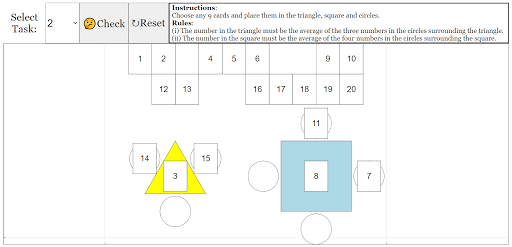 |
| The game in progress |
Astoundingly Average Number Game JavaScript HTML5 Applet
https://iwant2study.org/lookangejss/math/ejss_model_astoundingly_average/"}">https://iwant2study.org/lookangejss/math/ejss_model_astoundingly_average/
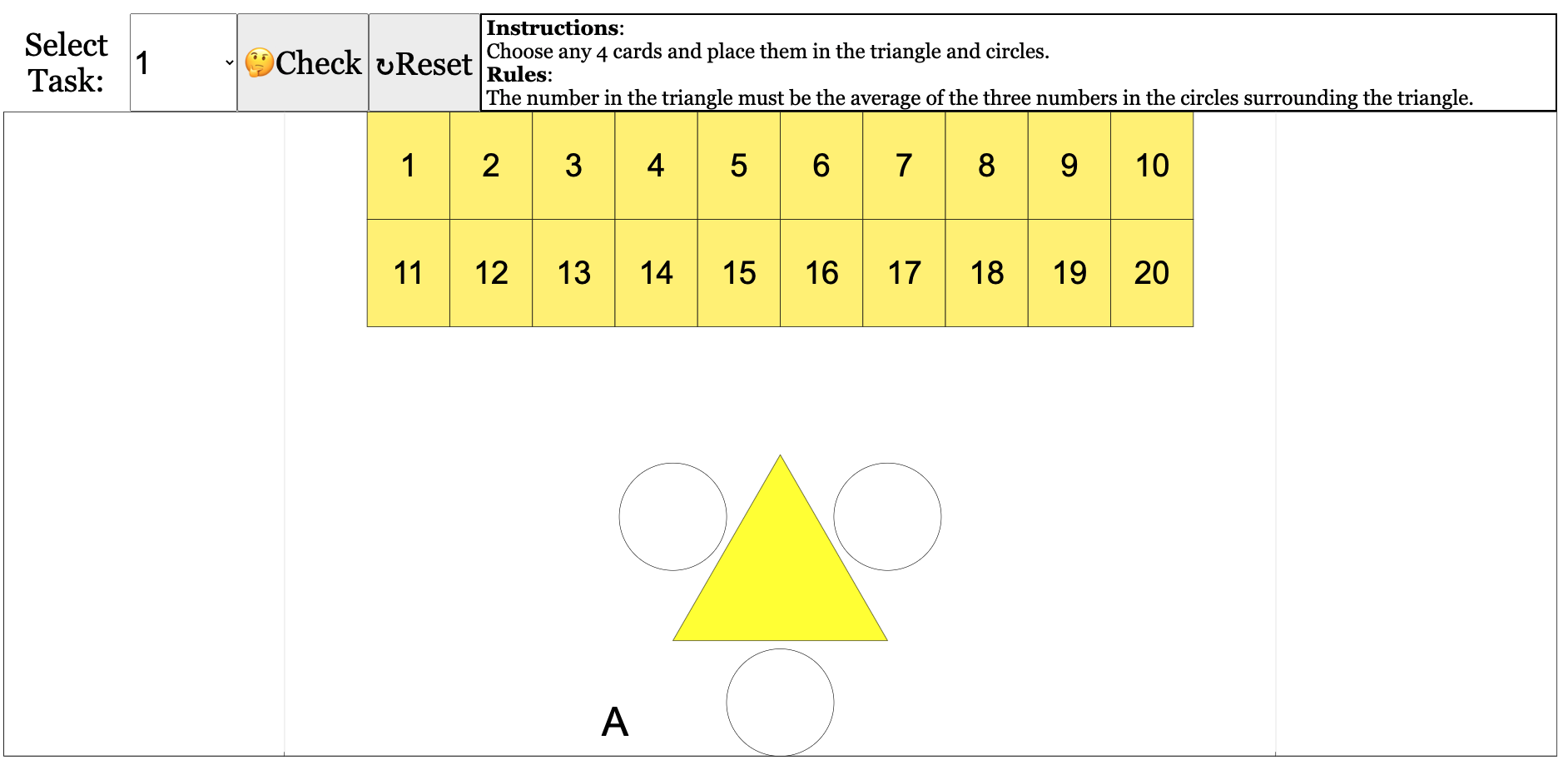 |
| Task 1 begin https://iwant2study.org/lookangejss/math/ejss_model_astoundingly_average/"}">https://iwant2study.org/lookangejss/math/ejss_model_astoundingly_average/ |
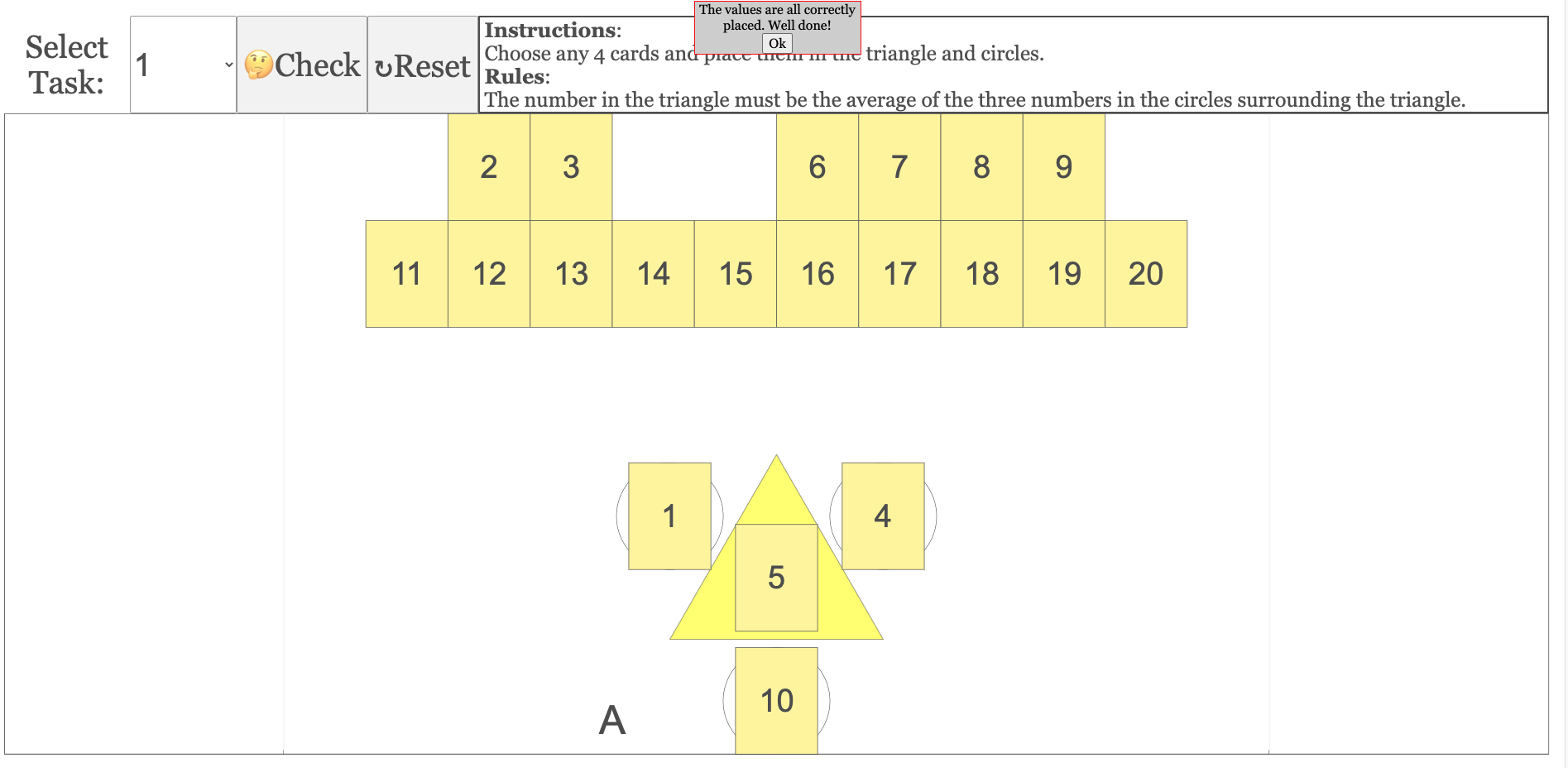 |
| Task 1 one possible solution https://iwant2study.org/lookangejss/math/ejss_model_astoundingly_average/"}">https://iwant2study.org/lookangejss/math/ejss_model_astoundingly_average/ |
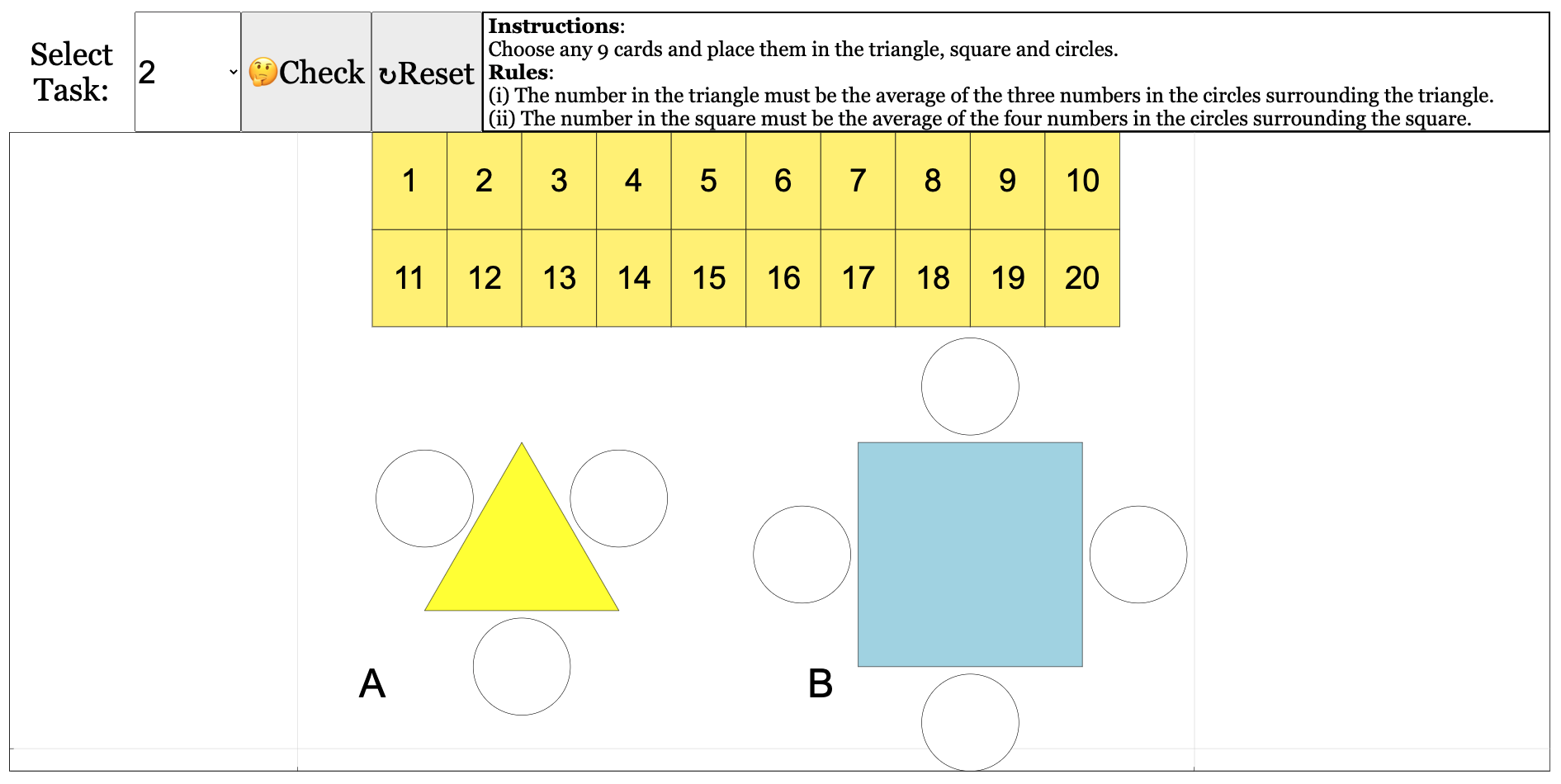 |
| Task 2 begin https://iwant2study.org/lookangejss/math/ejss_model_astoundingly_average/"}">https://iwant2study.org/lookangejss/math/ejss_model_astoundingly_average/ |
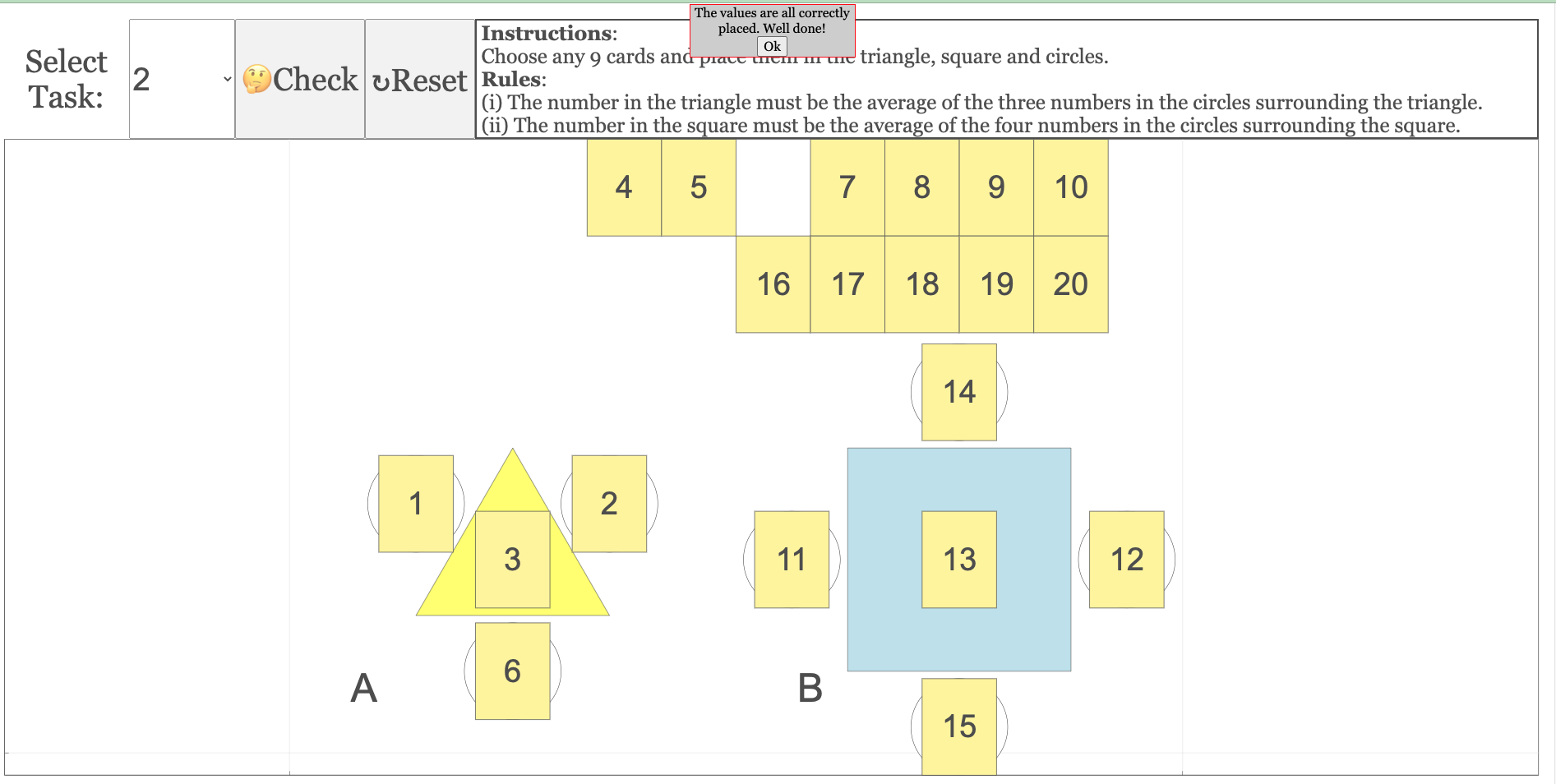 |
| Task 2 solution |
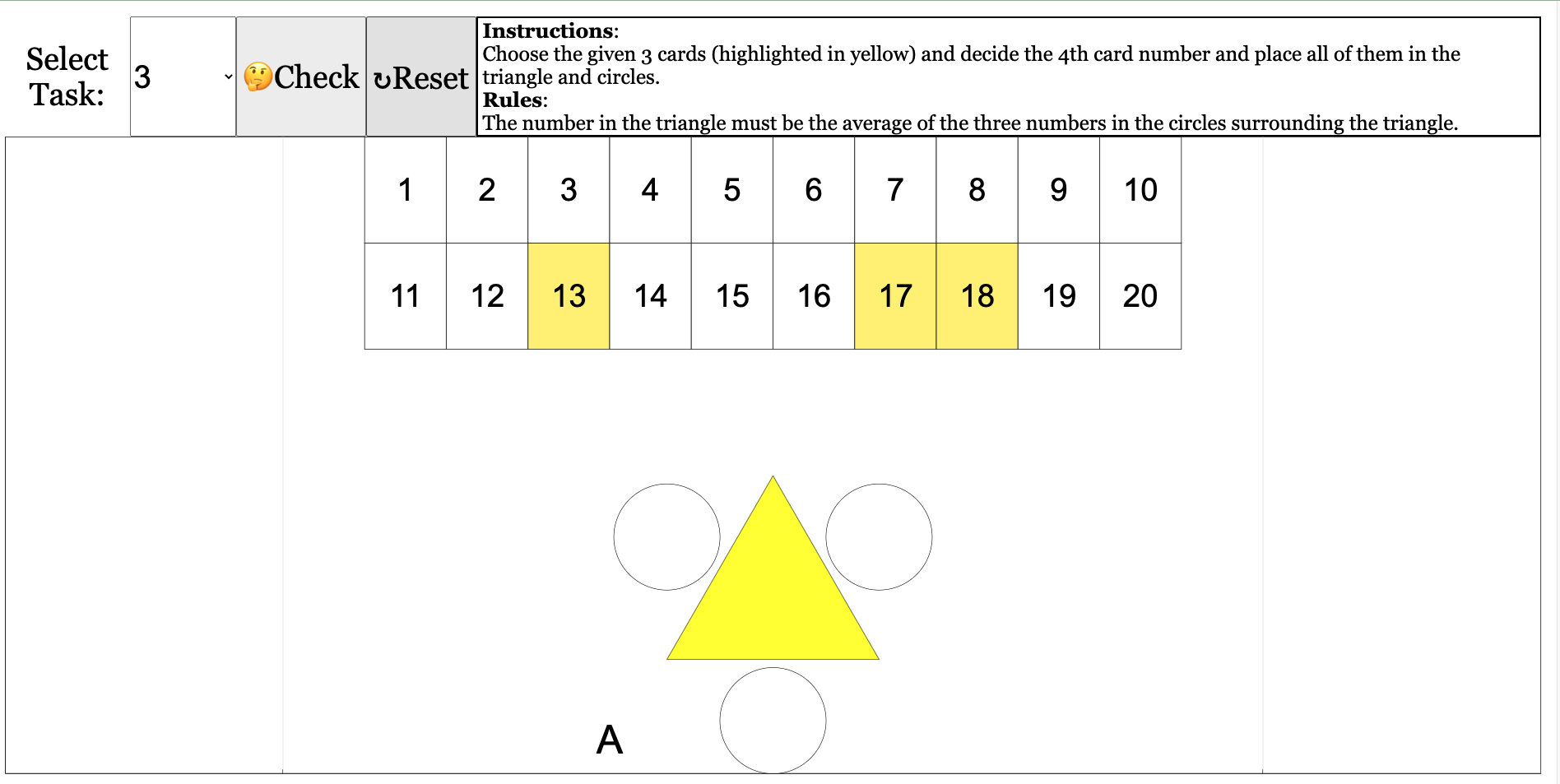 |
| Task 3 begin https://iwant2study.org/lookangejss/math/ejss_model_astoundingly_average/"}">https://iwant2study.org/lookangejss/math/ejss_model_astoundingly_average/ |
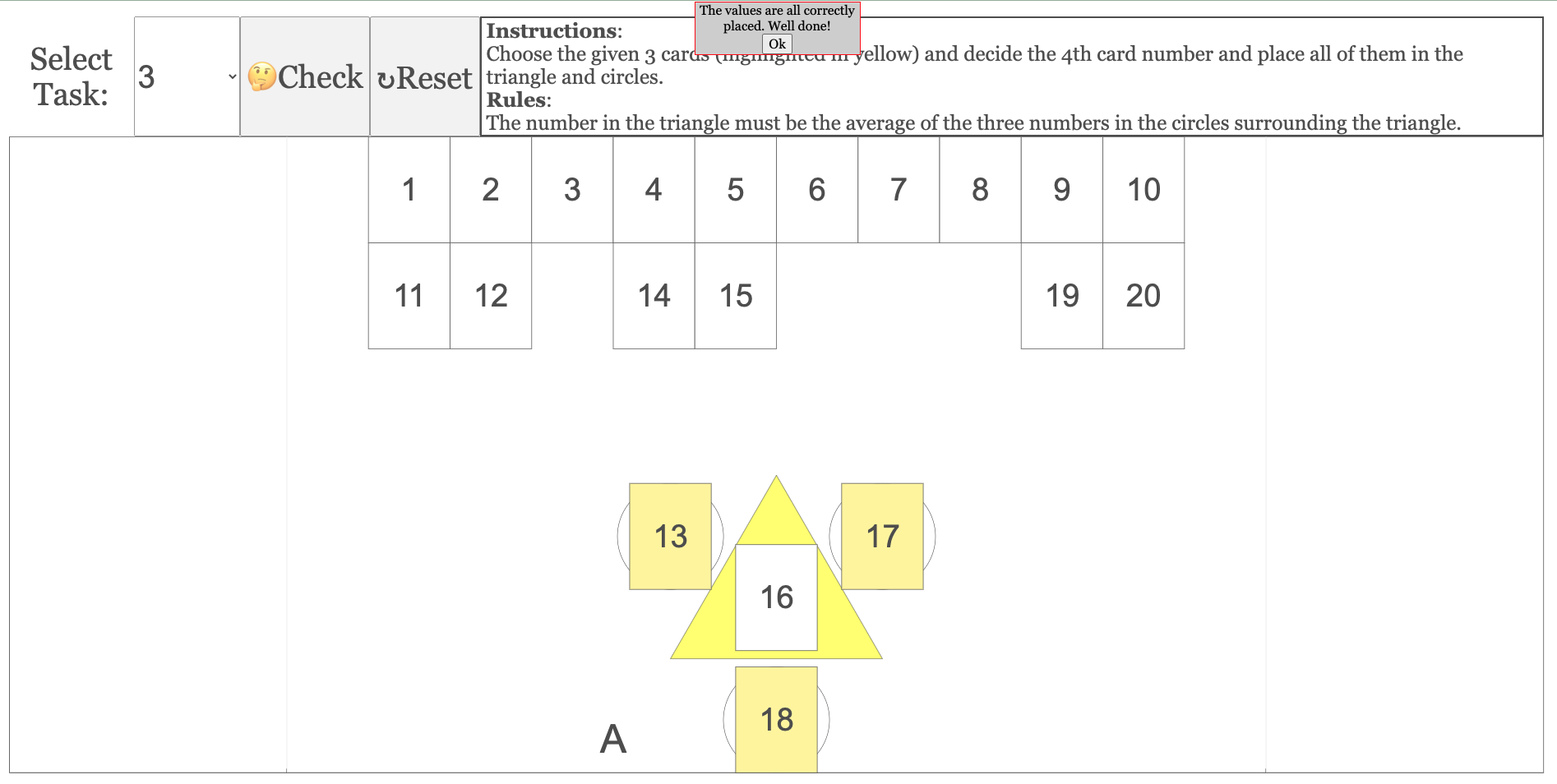 |
| Task 3 solution https://iwant2study.org/lookangejss/math/ejss_model_astoundingly_average/"}">https://iwant2study.org/lookangejss/math/ejss_model_astoundingly_average/ |
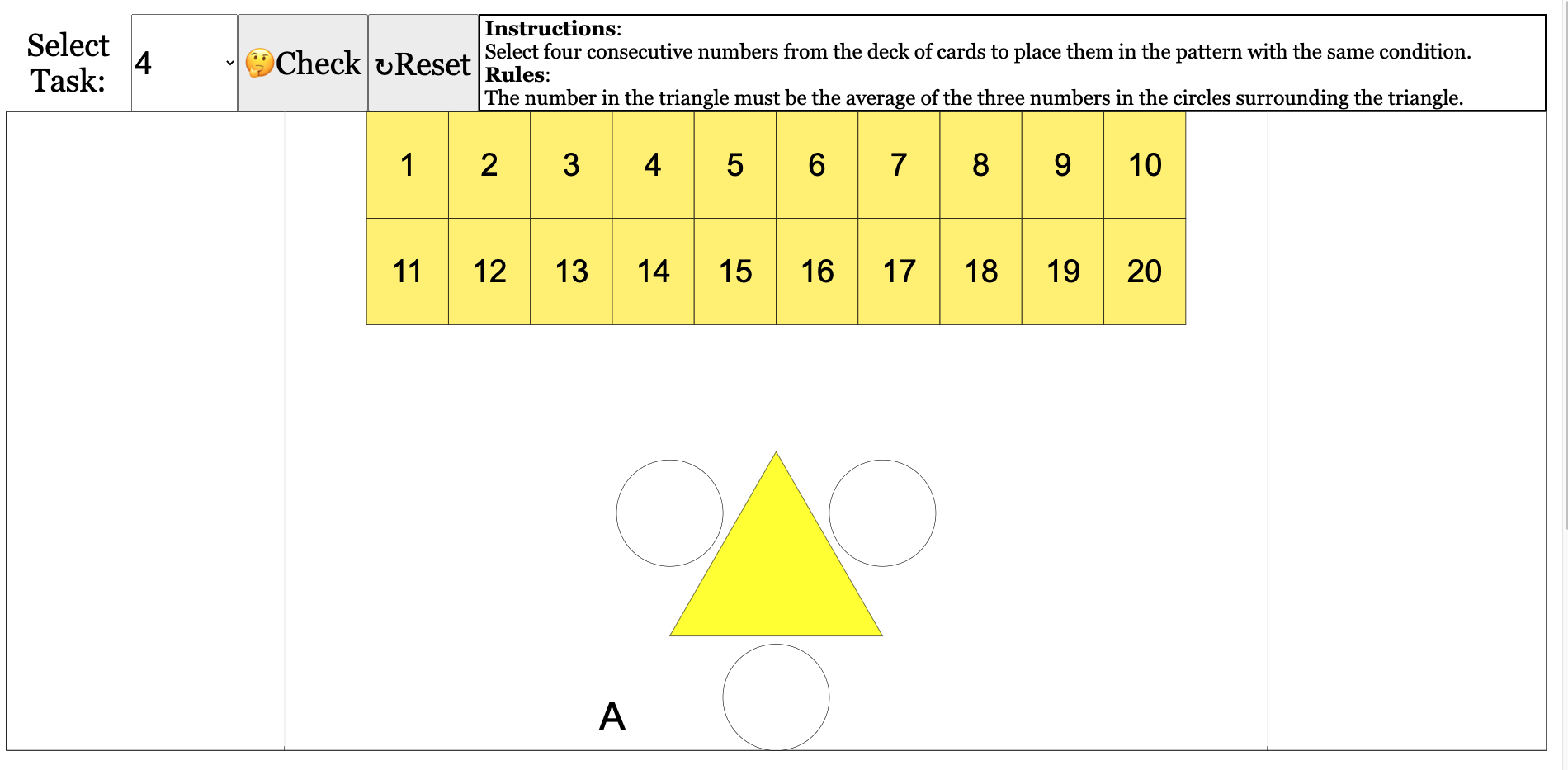 |
| Task 4 begin, note it has no solution https://iwant2study.org/lookangejss/math/ejss_model_astoundingly_average/"}">https://iwant2study.org/lookangejss/math/ejss_model_astoundingly_average/ |
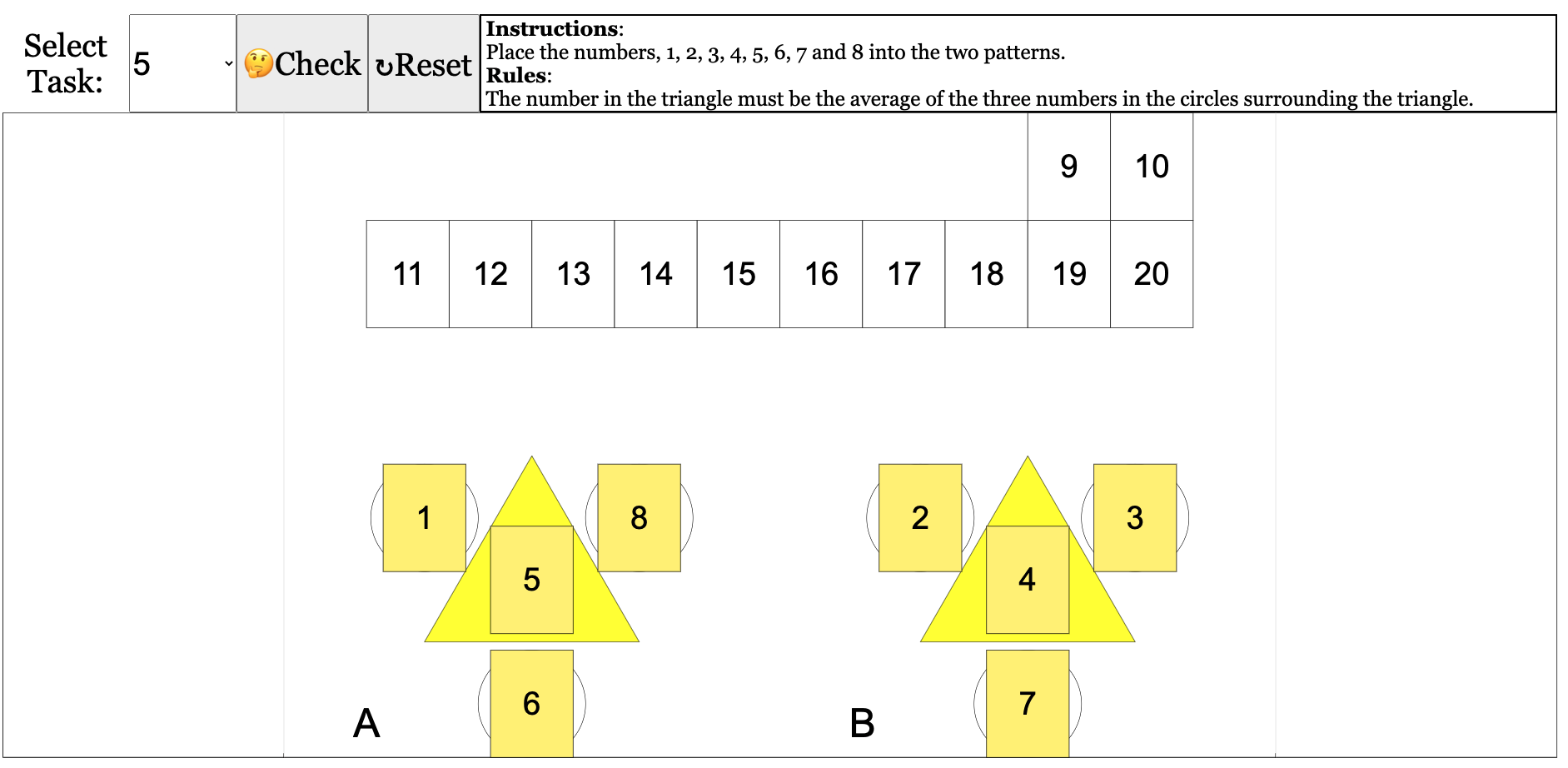 |
| Task 5 begin https://iwant2study.org/lookangejss/math/ejss_model_astoundingly_average/"}">https://iwant2study.org/lookangejss/math/ejss_model_astoundingly_average/ |
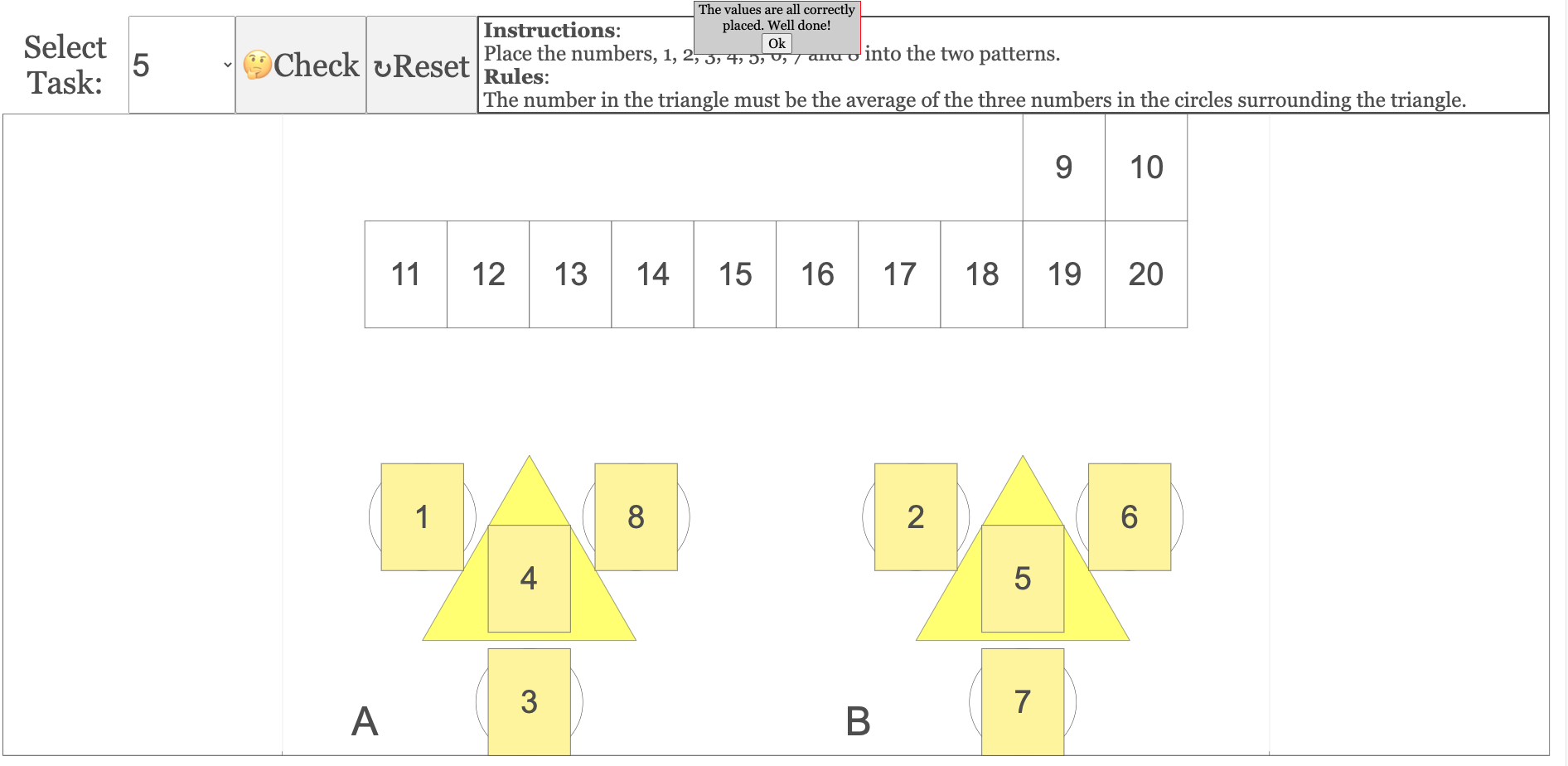 |
| Task 5 solution https://iwant2study.org/lookangejss/math/ejss_model_astoundingly_average/"}">https://iwant2study.org/lookangejss/math/ejss_model_astoundingly_average/ |
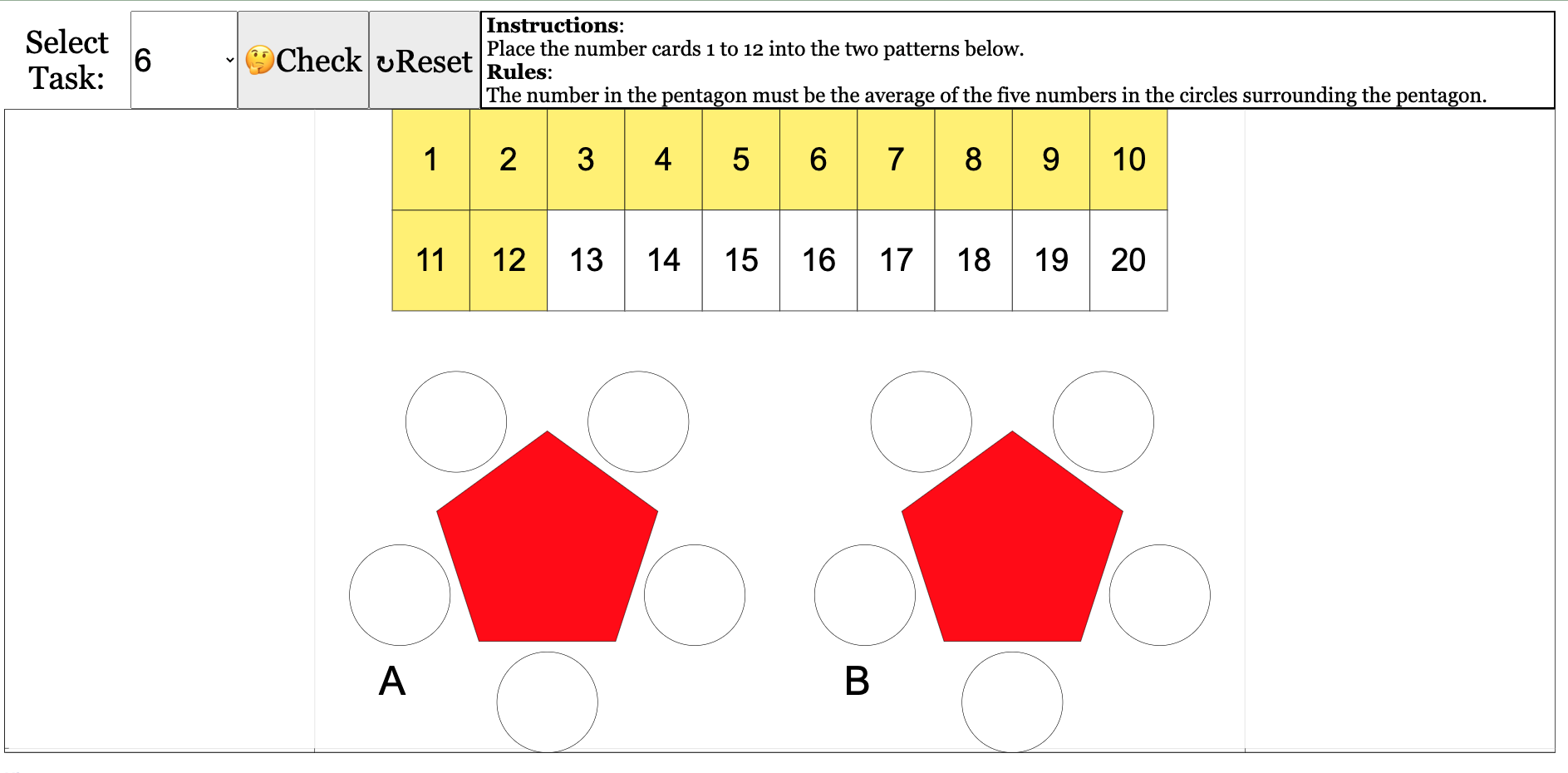 |
| Task 6 begin https://iwant2study.org/lookangejss/math/ejss_model_astoundingly_average/"}">https://iwant2study.org/lookangejss/math/ejss_model_astoundingly_average/ |
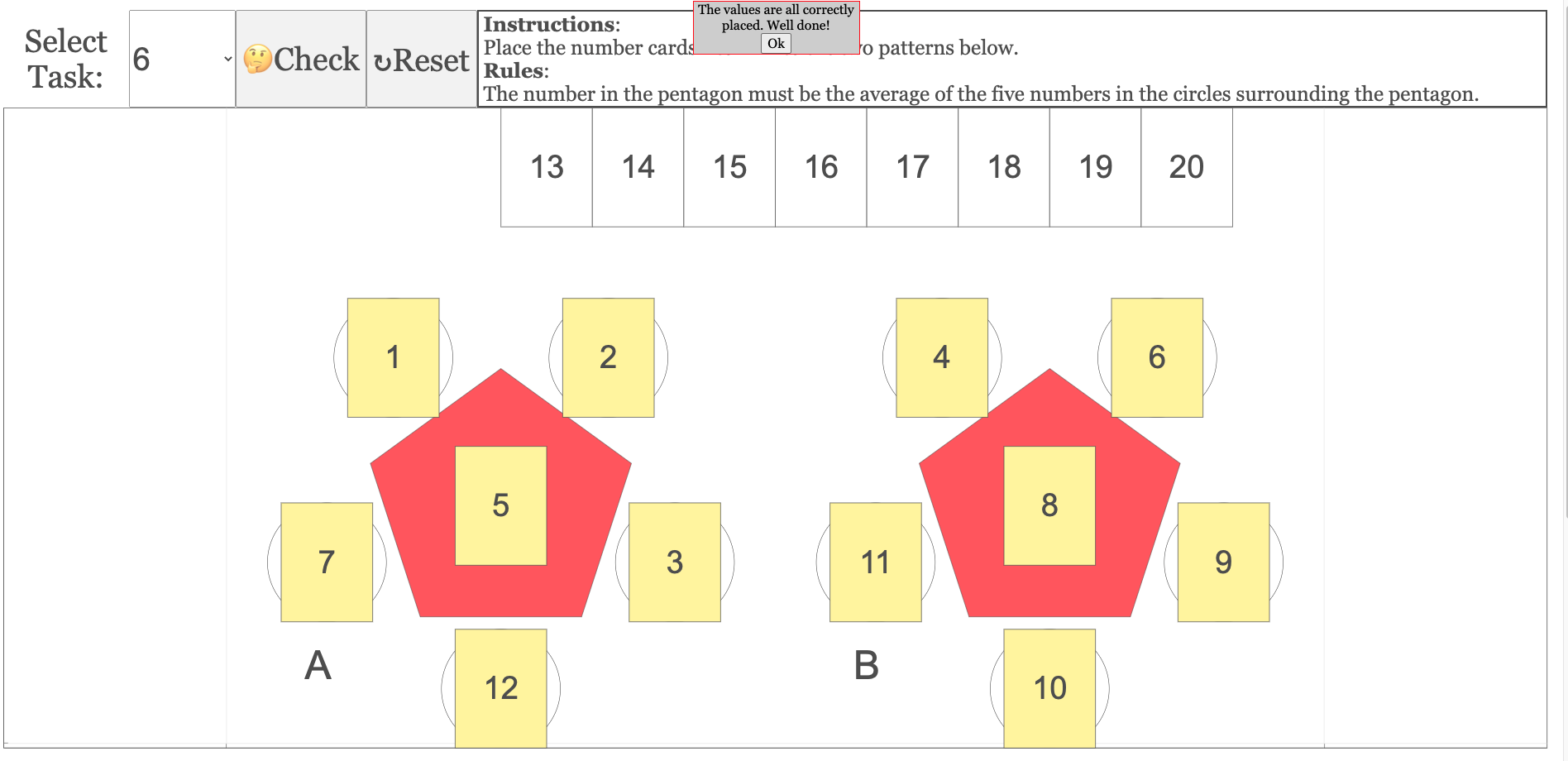 |
| Task 6 solution https://iwant2study.org/lookangejss/math/ejss_model_astoundingly_average/"}">https://iwant2study.org/lookangejss/math/ejss_model_astoundingly_average/ |
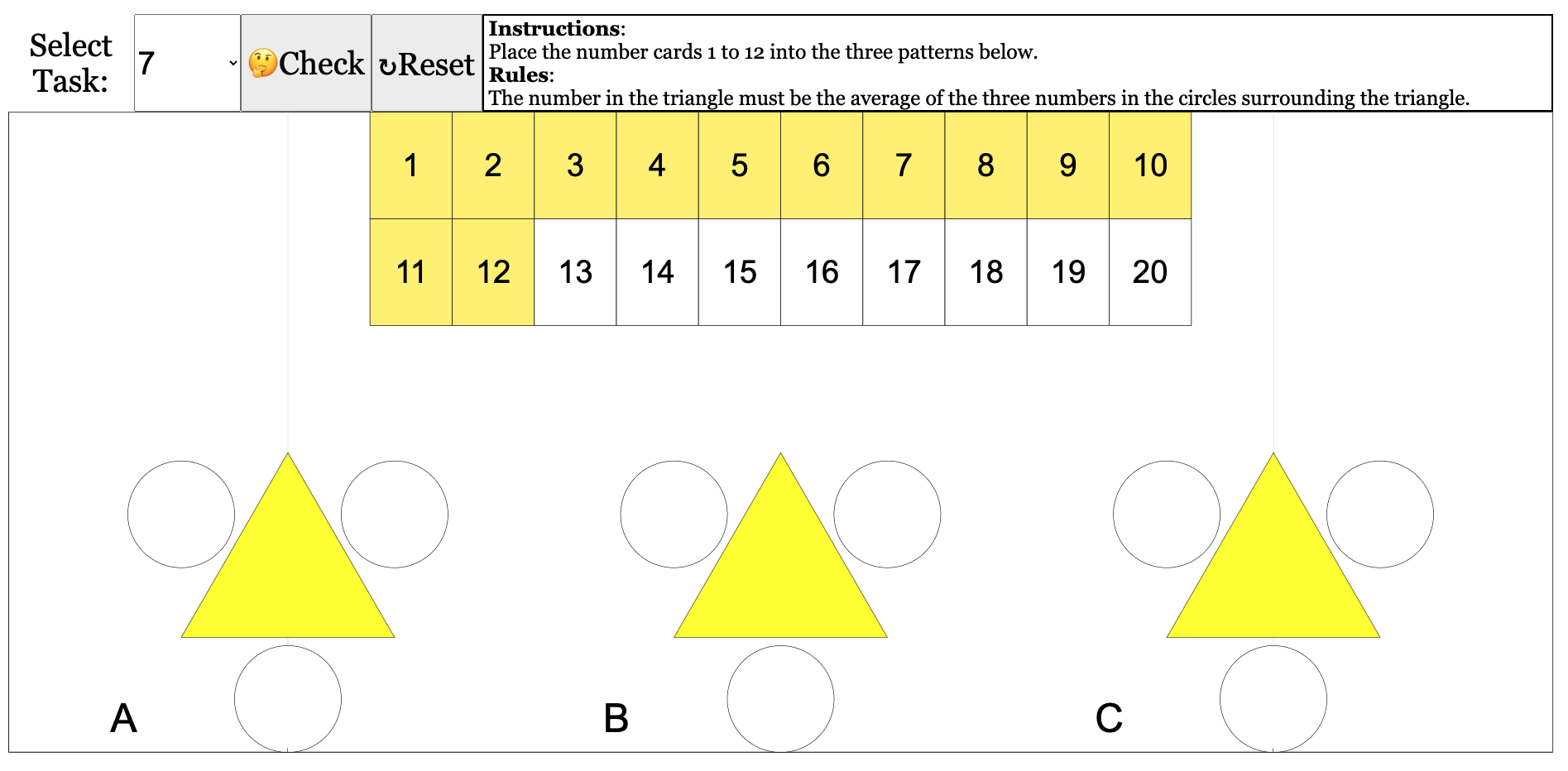 |
| task 7, note it has no solution https://iwant2study.org/lookangejss/math/ejss_model_astoundingly_average/"}">https://iwant2study.org/lookangejss/math/ejss_model_astoundingly_average/ |
Research
[text]
Video
[text]
Version:
- https://iwant2study.org/lookangejss/math/ejss_model_astoundingly_average/
- https://weelookang.blogspot.com/2021/06/astoundingly-average-number-game.html
- https://weelookang.blogspot.com/2021/11/astoundingly-average-number-game-to.html
Other Resources
[text]
Frequently Asked Questions: Astoundingly Average Number Game
1. What is the "Astoundingly Average" number game? The "Astoundingly Average" number game is an interactive JavaScript HTML5 applet designed for learning and practicing the concept of averages. In this game, users are presented with shapes containing numbers, where the number inside each shape must be the exact average of the numbers placed in the surrounding circles.
2. How do you play the game? Players are given a set of numbers that can be dragged and dropped into the circles around various shapes. The goal is to arrange the numbers in such a way that the number within each shape equals the average of the numbers in its adjacent circles. After arranging the numbers, players can use a "Check" button to see if their solution is correct.
3. What mathematical concepts does this game reinforce? The primary mathematical concept reinforced by this game is the calculation of the average (mean) of a set of numbers. It also subtly involves addition and division, as these operations are necessary to determine the average. The game can also touch upon problem-solving skills and logical thinking as players experiment with different number placements.
4. Is this game suitable for a specific age group or educational level? While the source doesn't explicitly state a specific age group, the game's focus on basic arithmetic concepts like averaging, addition, and division suggests it is suitable for elementary and middle school students. It can be a fun and engaging way for them to practice these skills.
5. How many different challenges or tasks does the game offer? The game provides 7 unique tasks for students to engage with. These tasks likely present different configurations of shapes and circles, requiring players to apply their understanding of averages in various scenarios.
6. Are there solutions provided for the game's tasks? Yes, the resource indicates that solutions are available for most of the tasks (Tasks 1, 2, 3, 5, and 6). Additionally, it explicitly mentions that Tasks 4 and 7 have no solution, which can be an interesting aspect of the game, encouraging students to think critically about the possibility of solutions.
7. Can this game be embedded into other web pages? Yes, the resource provides an embed code (an <iframe> tag) that allows teachers or users to easily integrate the "Astoundingly Average" number game into their own webpages or learning platforms. This makes it a versatile tool for educational purposes.
8. Who developed this game and under what license is it released? The "Astoundingly Average" number game was based on an idea by Theresa Heng and developed by Francisco Esquembre, Shaun Quek, Loo Kang Wee, and Félix Jesús García Clemente. The software is compiled with EJS (Easy Java/JavaScript Simulations) and is released under a specified license (though the exact license details are not fully provided in the excerpt, it mentions Creative Commons Attribution-Share Alike 4.0 Singapore License for the contents).