arXiv:1206.6489
Using Tracker as a Pedagogical Tool for Understanding Projectile Motion
Tracker for projectile motion
TrackerProjectile MotionKinematics
Research Digest
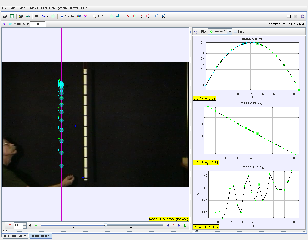
This paper uses Tracker to make projectile motion evidence-based. Students can separate horizontal and vertical motion from a real video, making the independence of components easier to justify.
Use It Tomorrow
Track a projectile video and compare x-time, y-time, vx-time, and vy-time graphs. Ask which graph shows constant velocity and which shows acceleration.
Pedagogical Move
Make students explain why horizontal and vertical components can be analysed separately.
Student Agency
Frame the task so students work like young scientists: they choose or justify the variable to test, make a prediction, collect evidence, defend a claim, and decide how to improve the model or investigation.
Discussion Prompts
- What evidence does the model, video, or activity make visible?
- Which variable should students change first, and what should they keep constant?
- What claim can students make from the evidence, and what limitation should they acknowledge?
Reveal suggested answers
- Evidence: Tracker makes the projectile path, horizontal and vertical position data, velocity graphs, and acceleration estimate visible from a real video.
- Variable: Change the launch angle or initial speed first; keep the same video scale, frame rate, gravity, and tracking method fixed.
- Claim: Students can claim that horizontal velocity is approximately constant while vertical motion accelerates downward, while acknowledging tracking uncertainty and air resistance.