Researchiwant2studyJoomla version

OSPSG Research

Research digests for classroom action

Short, teacher-friendly readings of Open Source Physics papers, paired with videos, images, simulations, Tracker activities, immediately usable pedagogical moves, and explicit links to MOE's EdTech Masterplan 2030.

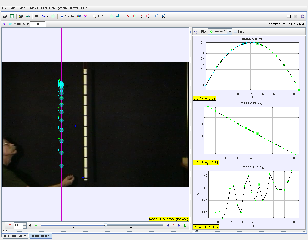
Using Tracker to understand toss up and free fall motion: a case study

Using Tracker to understand toss up and free fall motion: a case study

TrackerKinematicsFree fall

This paper is a classroom case for helping beginning physics students connect a real video of vertical motion with displacement-time and velocity-time representations. The useful classroom idea is not merely to...

Video Analysis and Modeling Performance Task to promote becoming like scientists in classrooms

Video Analysis and Modeling Performance Task to promote becoming like scientists in classrooms

TrackerPerformance TaskScientific Practices

The key contribution is the framing of video analysis as a performance task: students do not only answer end-of-chapter questions, they collect evidence, model a situation, and defend a scientific explanation. ...

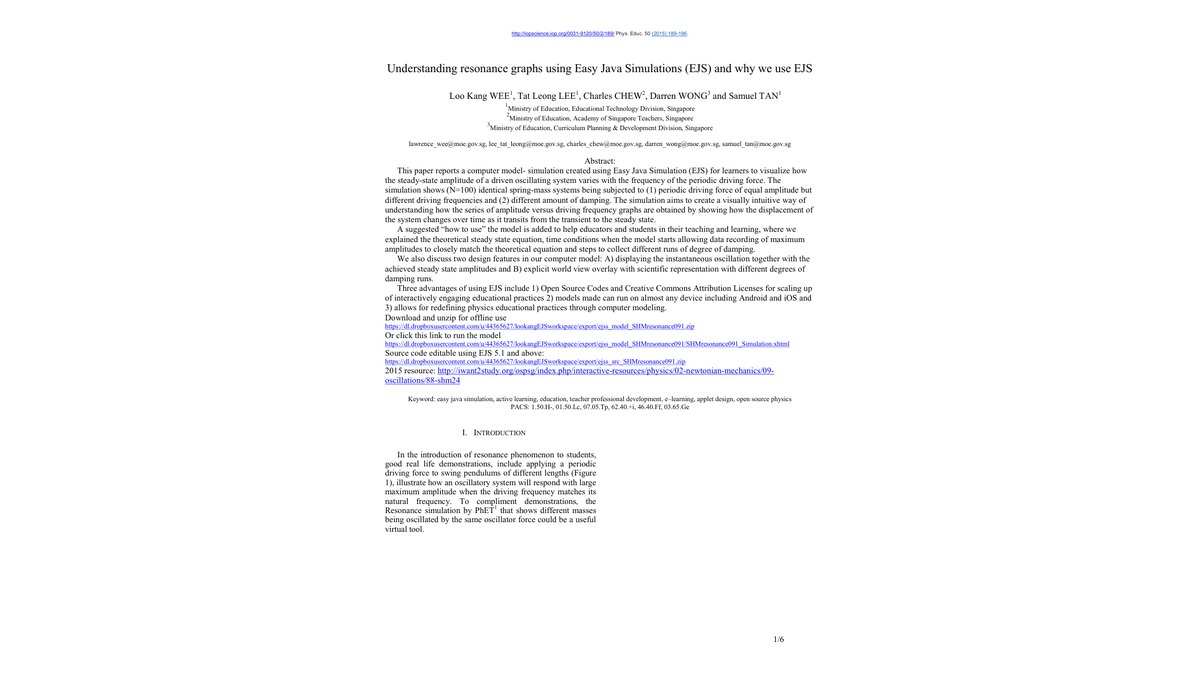
Understanding resonance graphs using Easy Java Simulations (EJS) and why we use EJS

Understanding resonance graphs using Easy Java Simulations (EJS) and why we use EJS

EJSOscillationsResonance

This paper makes resonance graphs less mysterious by letting students vary driving frequency, damping, and amplitude while seeing the system respond. The article is useful when students can draw the resonance p...

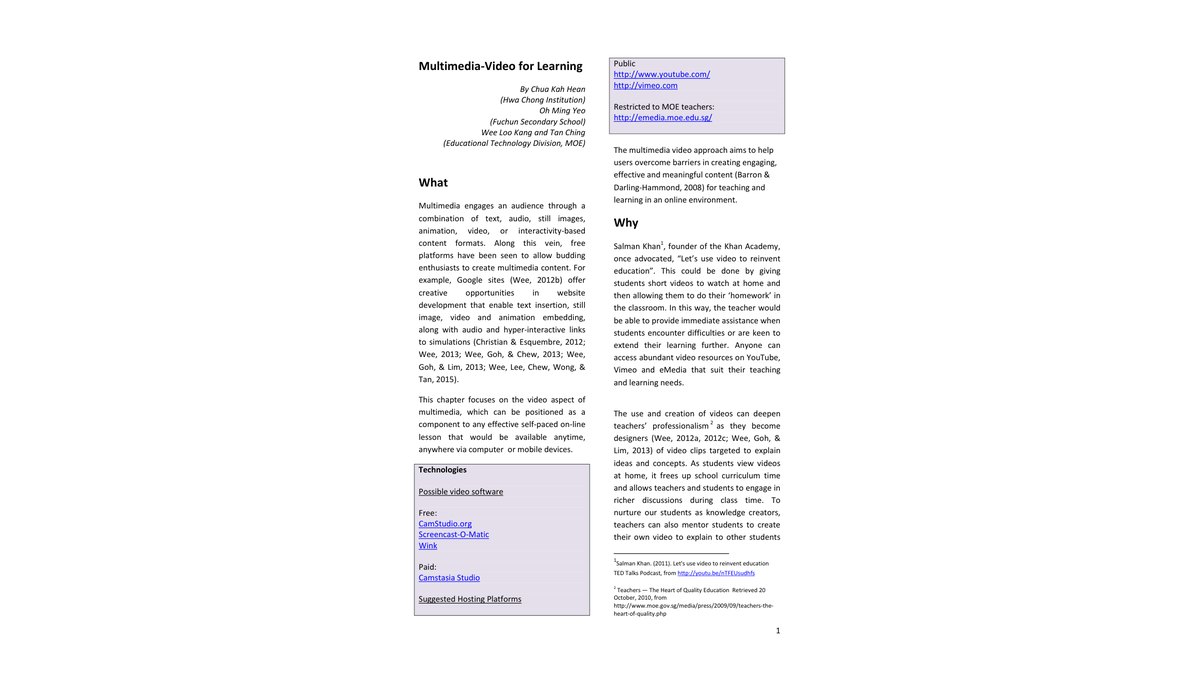
Multimedia-Video for Learning

Multimedia-Video for Learning

MultimediaVideoPedagogy

This paper is about using video as a learning object rather than as decoration. The strongest use is when video slows down a hard-to-see phenomenon, supports replay, and gives students a shared piece of evidenc...

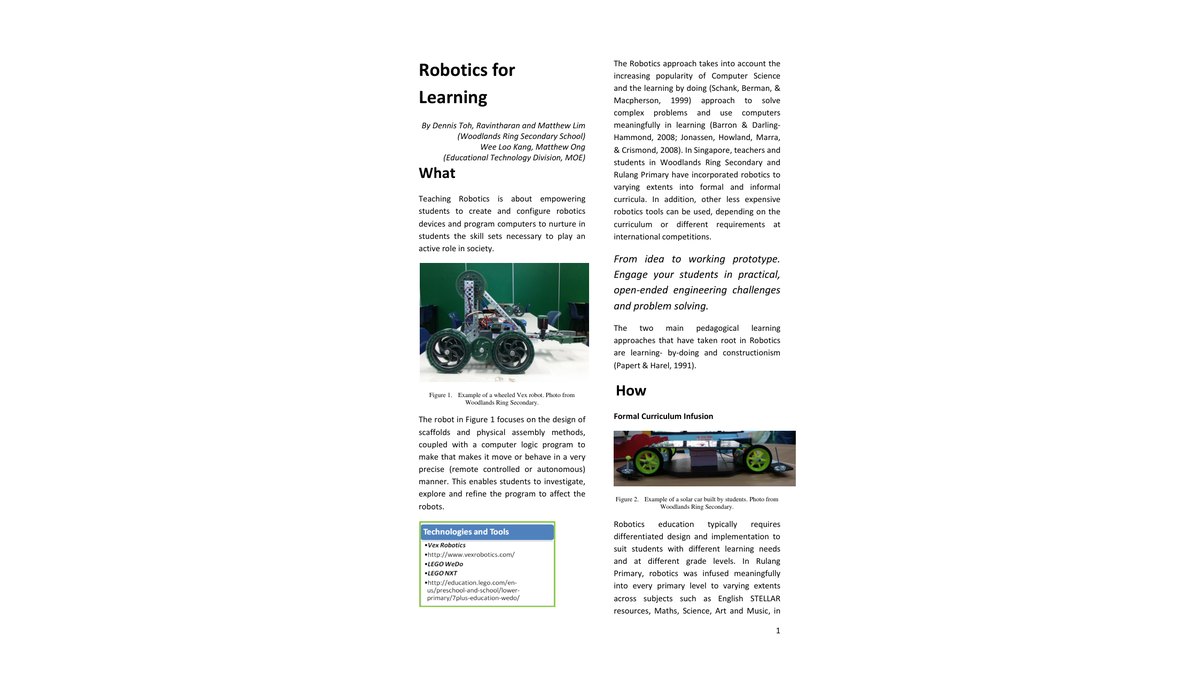
Robotics for Learning

Robotics for Learning

RoboticsSTEMDesign

The paper positions robotics as a way for students to make ideas tangible. It is most applicable when the robot is not treated as a gadget, but as a controllable system that can expose measurement, iteration, d...

Use of Blended Approach in the Learning of Electromagnetic Induction

Use of Blended Approach in the Learning of Electromagnetic Induction

EJSElectromagnetic InductionBlended Learning

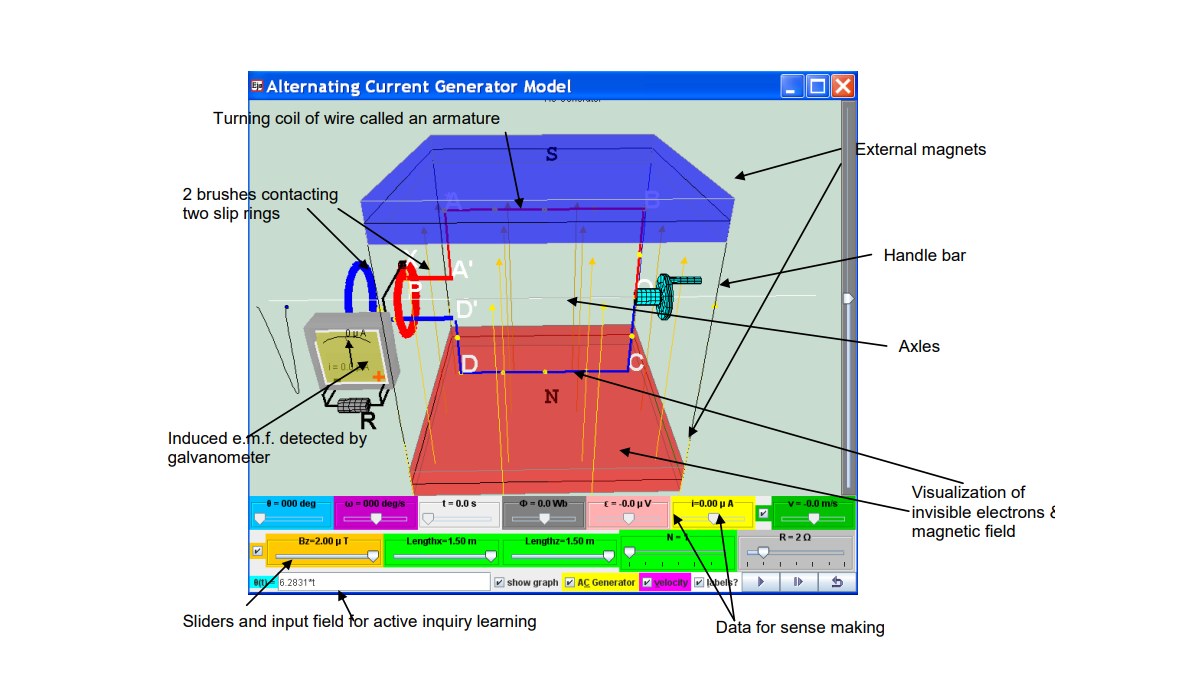
Electromagnetic induction is conceptually dense because learners need to coordinate motion, magnetic field change, induced current, and direction. This paper supports a blended approach where simulation, discus...

Performance Task using Video Analysis and Modelling to promote K12 eight practices of science

Performance Task using Video Analysis and Modelling to promote K12 eight practices of science

TrackerK12 Science PracticesModeling

This conference paper focuses on how video analysis and modeling can support practices such as asking questions, analyzing data, using mathematics, and constructing explanations. The classroom value is in the t...

NRF2011-EDU001-EL001 EduLab Project Scaling-up Reflections on Using Open Source Physics

NRF2011-EDU001-EL001 EduLab Project Scaling-up Reflections on Using Open Source Physics

Open Source PhysicsScalingEduLab

This paper is a reflection on scaling Open Source Physics work beyond isolated lessons. Its practical value is in the conditions for adoption: teacher ownership, editable resources, community sharing, and examp...

Vernier caliper and micrometer computer models using Easy Java Simulation and its pedagogical design feature-ideas to augment learning with real instruments

Vernier caliper and micrometer computer models using Easy Java Simulation and its pedagogical design feature-ideas to augment learning with real instruments

EJSMeasurementVernier Caliper

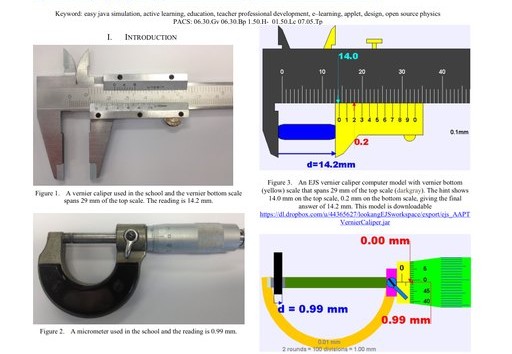
This paper shows how virtual instruments can prepare students for real measurement. The main design ideas are simple views, hints and answers, scale options, zero error, and assessment feedback....

Design, Customization and Implementation of Energy Simulation with 5E Model in Elementary Classroom

Design, Customization and Implementation of Energy Simulation with 5E Model in Elementary Classroom

Energy5EPrimary Science

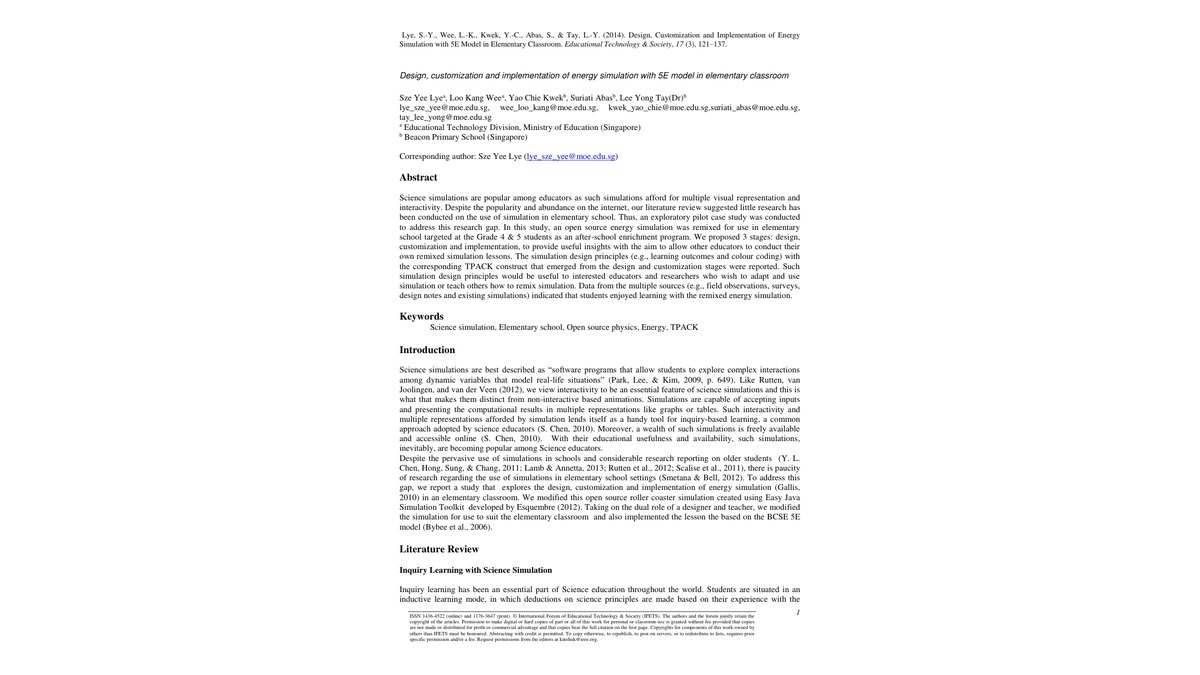
The paper connects an energy simulation to the 5E learning cycle: engage, explore, explain, elaborate, and evaluate. It is useful for primary or lower-secondary teaching where energy ideas need concrete represe...

Open Educational Resources from Performance Task using Video Analysis and Modeling - Tracker and K12 science education framework

Open Educational Resources from Performance Task using Video Analysis and Modeling - Tracker and K12 science education framework

OERTrackerPerformance Task

This paper frames Tracker activities as open educational resources that teachers can reuse and adapt. It is especially useful as a blueprint for turning a one-off performance task into a sharable lesson package...

Easy Java Simulation, an innovative tool for teachers as designers of gravity-physics computer models

Easy Java Simulation, an innovative tool for teachers as designers of gravity-physics computer models

EJSGravityTeacher Design

This paper argues that teachers can be designers of physics models, not just users of software. Gravity is a strong context because learners can manipulate parameters and compare motion that is otherwise hard t...

Computer Models Design for Teaching and Learning using Easy Java Simulation

Computer Models Design for Teaching and Learning using Easy Java Simulation

EJSComputer ModelsOER

This broad paper documents the design of EJS computer models for teaching. It is useful as a foundation article for the whole OSPSG approach: teachers and students learn through manipulable models, not only sta...

Addressing learning difficulties in Newtons 1st and 3rd Laws through problem based inquiry using Easy Java Simulation

Addressing learning difficulties in Newtons 1st and 3rd Laws through problem based inquiry using Easy Java Simulation

EJSNewton's LawsInquiry

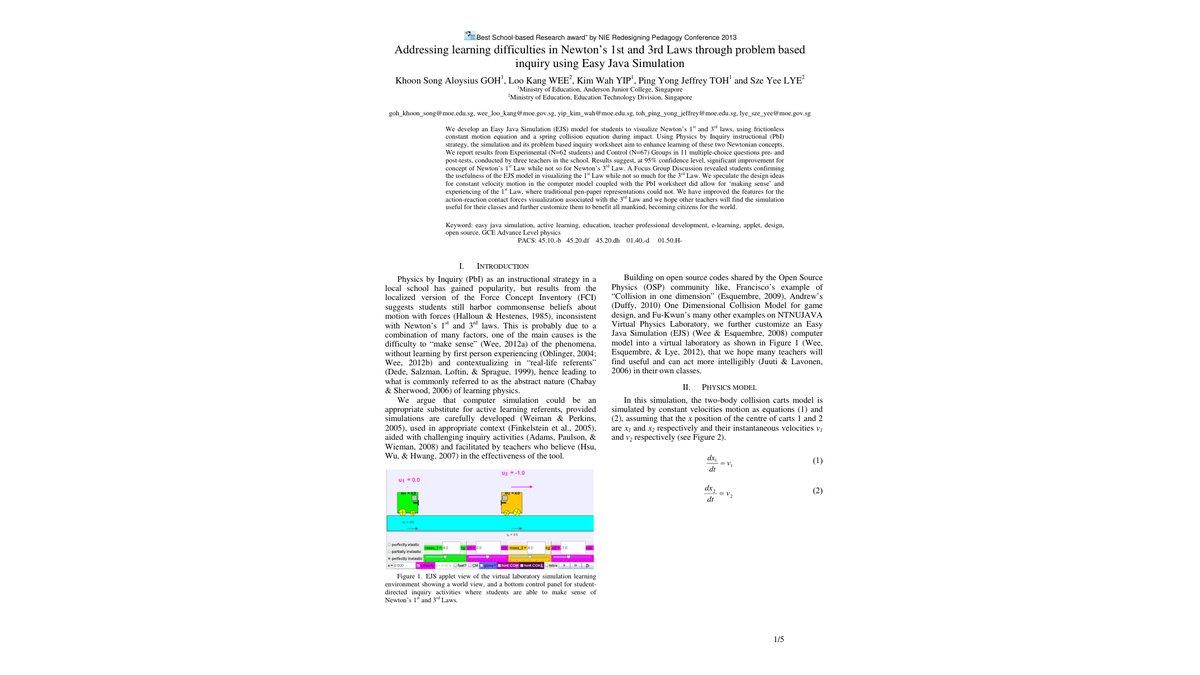
The paper targets persistent misconceptions about force pairs, motion, and interaction. EJS is used to make otherwise invisible relationships inspectable so students can test ideas instead of memorising law sta...

Open Source Physics

Open Source Physics

Open Source PhysicsOERTeacher Community

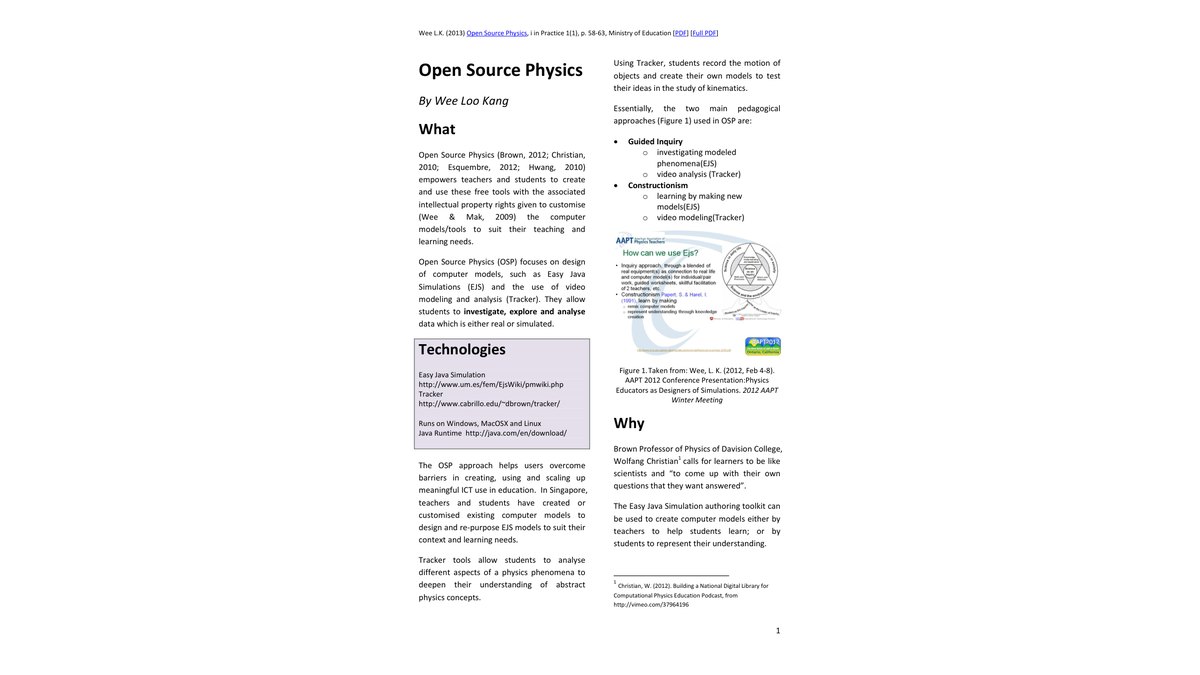
This article is a readable entry point into the Open Source Physics philosophy: accessible tools, editable models, and a culture of sharing. It helps explain why the resource library is built around open, reusa...

Enabling Gravity Physics by Inquiry using Easy Java Simulation

Enabling Gravity Physics by Inquiry using Easy Java Simulation

EJSGravityInquiry

This paper connects gravity simulations to inquiry pedagogy. Students can investigate how gravitational field, potential, orbital motion, or satellite behaviour changes when conditions are varied....

Geostationary Earth Orbit Satellite Model using Easy Java Simulation

Geostationary Earth Orbit Satellite Model using Easy Java Simulation

EJSSatelliteGravity

The paper uses an EJS model to make geostationary orbit understandable as a condition involving period, radius, and Earth rotation. The model is useful because orbit concepts are spatial and dynamic....

Open Source Energy Simulation for Elementary School

Open Source Energy Simulation for Elementary School

EnergyElementaryOER

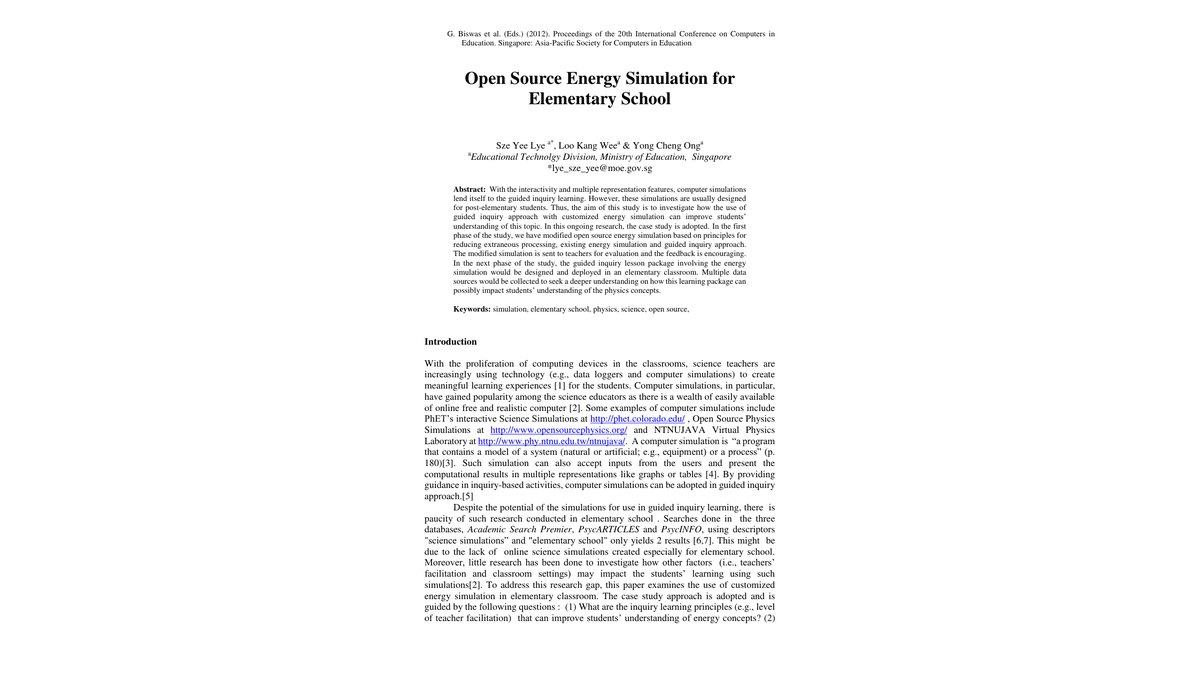
The focus is elementary energy learning: students need visible, manipulable situations to talk about energy transfer and transformation. The open-source angle allows the activity to be adapted for local example...

Physics Educators as Designers of Simulation using Easy Java Simulation (Ejs) Part 2

Physics Educators as Designers of Simulation using Easy Java Simulation (Ejs) Part 2

EJSTeacher DesignProfessional Learning

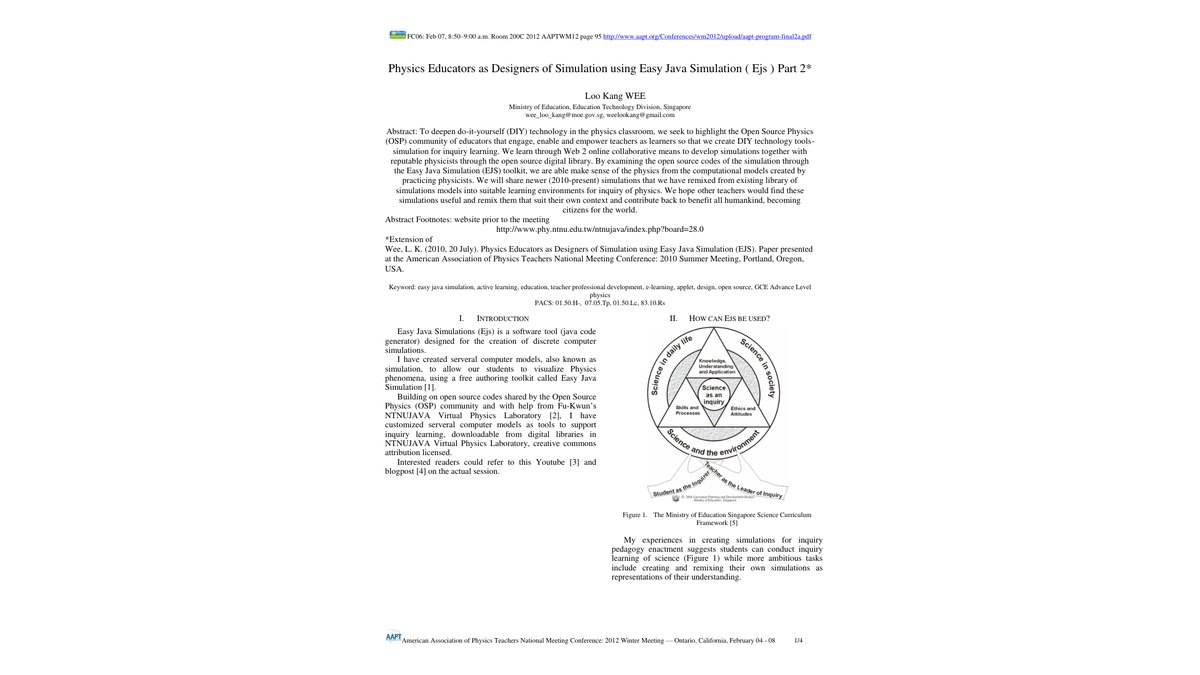
This presentation continues the argument that teachers can design and adapt simulations. It is useful for professional learning because it treats simulation design as pedagogical design....

Physics Educators as Designers of Simulation using Easy Java Simulation (Ejs)

Physics Educators as Designers of Simulation using Easy Java Simulation (Ejs)

EJSTeacher DesignOpen Source

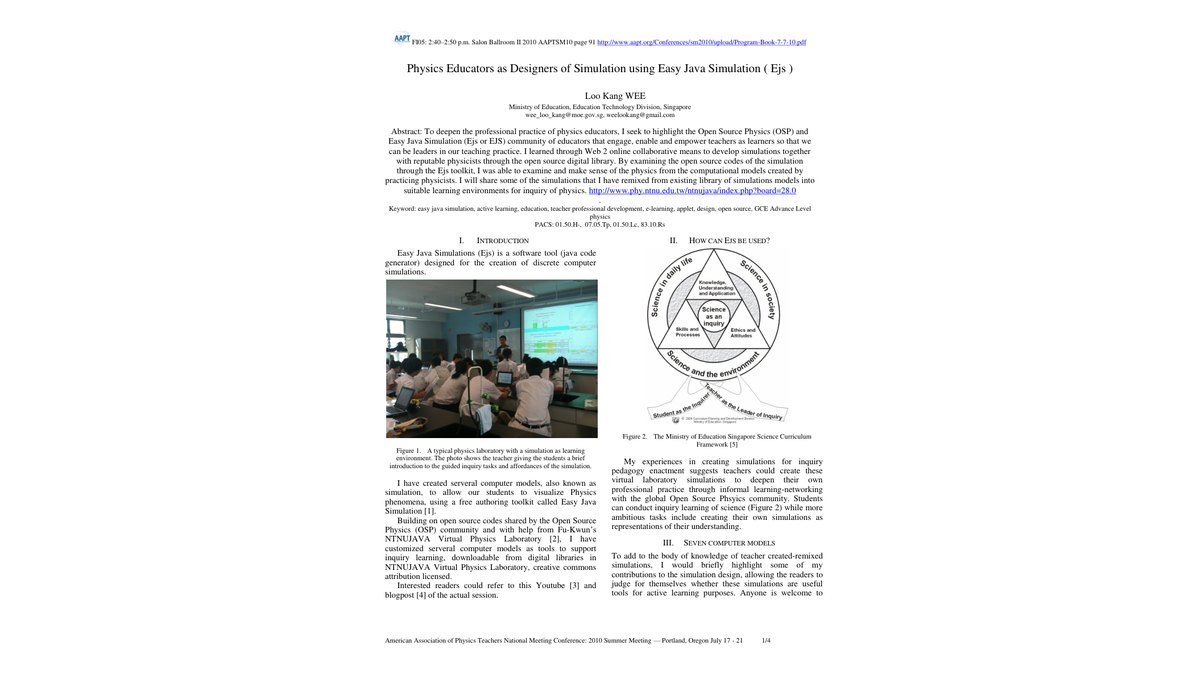
This is an early articulation of a teacher-designer stance. The value is that teachers can build models around the exact conceptual bottlenecks they see in class....

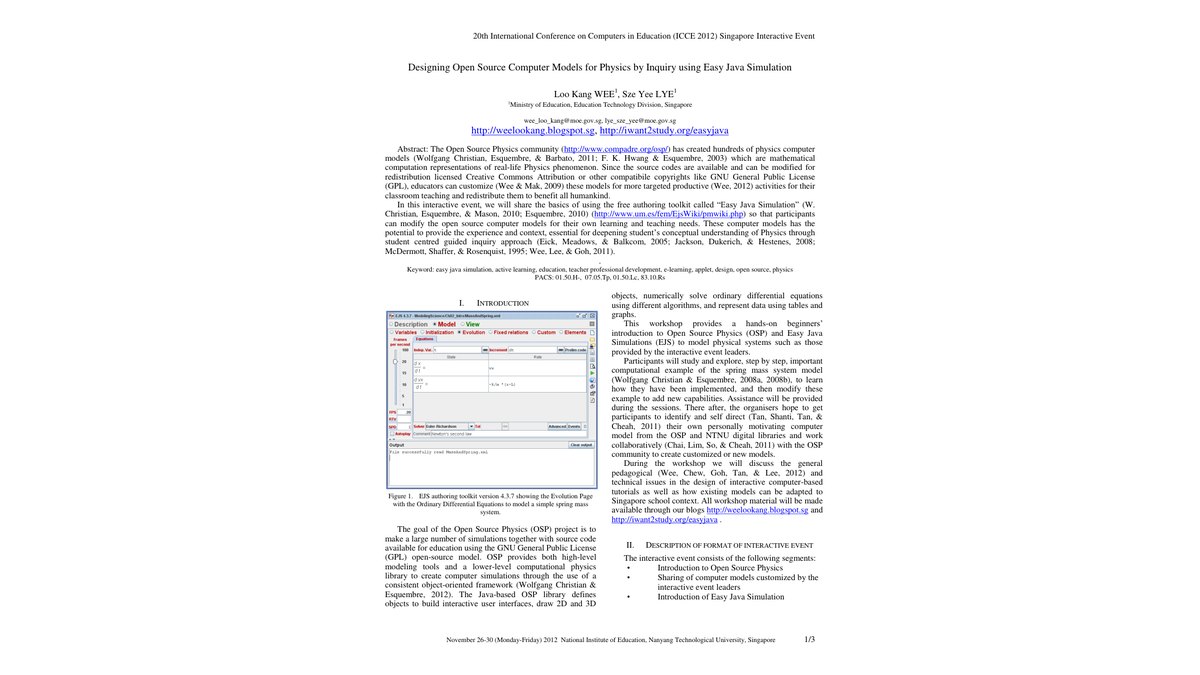
Designing Open Source Computer Models for Physics by Inquiry using Easy Java Simulation

Designing Open Source Computer Models for Physics by Inquiry using Easy Java Simulation

EJSInquiryComputer Models

This short paper links open-source model design to inquiry learning. It is especially useful for turning a simulation from a demonstration into an investigation....

Video Analysis and Modeling Tool for Physics Education: A workshop for Redesigning Pedagogy

Video Analysis and Modeling Tool for Physics Education: A workshop for Redesigning Pedagogy

TrackerWorkshopPedagogy

The paper is workshop-oriented: it shows how video analysis can change the pedagogy of motion lessons. The teacher move is to give students authentic data and let them construct meaning from it....

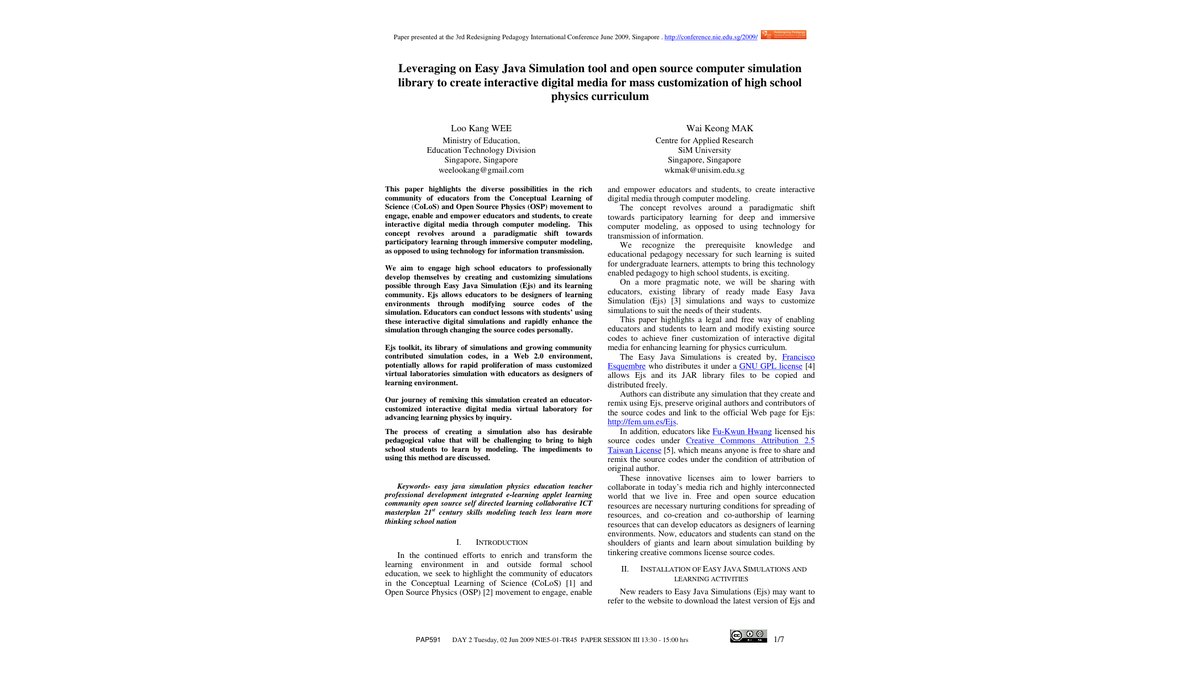
Leveraging on Easy Java Simulation tool and open source computer simulation library to create interactive digital media for mass customization of high school physics curriculum

Leveraging on Easy Java Simulation tool and open source computer simulation library to create interactive digital media for mass customization of high school physics curriculum

EJSCurriculumCustomization

This paper is about scalability and customisation: EJS and an open library make it possible to adapt resources for different high-school physics needs....

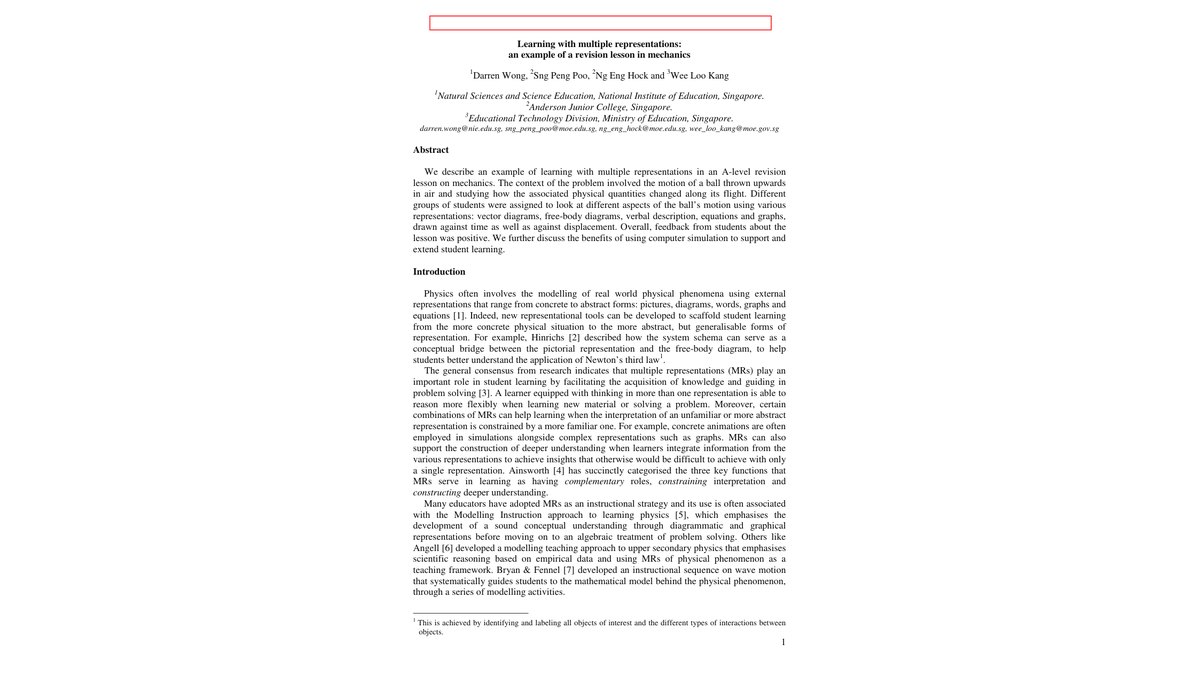
Learning with multiple representations: An example of a revision lesson in mechanics

Learning with multiple representations: An example of a revision lesson in mechanics

MechanicsMultiple RepresentationsRevision

The key idea is that students learn mechanics better when they coordinate diagrams, graphs, equations, and verbal explanations. It is directly applicable to revision lessons where students may know formulas but...

Using Tracker as a Pedagogical Tool for Understanding Projectile Motion

Using Tracker as a Pedagogical Tool for Understanding Projectile Motion

TrackerProjectile MotionKinematics

This paper uses Tracker to make projectile motion evidence-based. Students can separate horizontal and vertical motion from a real video, making the independence of components easier to justify....

One-dimensional collision carts computer model and its design ideas for productive experiential learning

One-dimensional collision carts computer model and its design ideas for productive experiential learning

EJSCollisionsMomentum

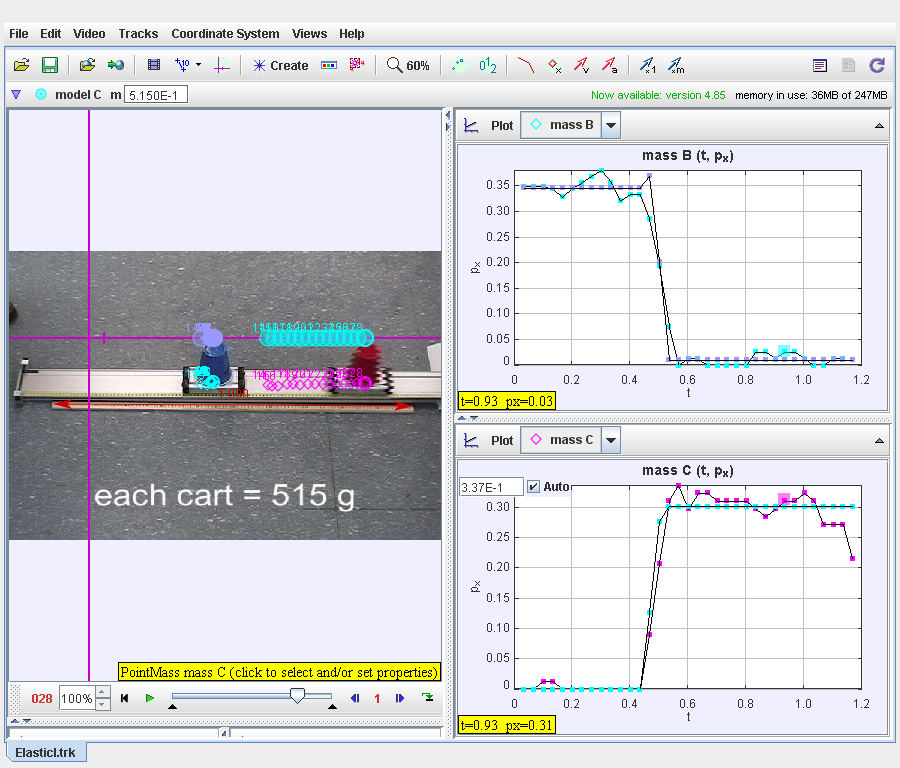
The paper uses a collision cart model to support experiential learning of momentum and collisions. It is valuable because students can vary masses and velocities, then compare before-and-after quantities....

EdTech Masterplan 2030 alignment

What the papers and lessons are constructing

These digests are not just a bibliography. They show how research ideas become lesson designs: students manipulate models, choose variables, collect evidence, discuss representations, improve explanations, and begin to see themselves as young scientists with agency.

Read MOE EdTech Masterplan 2030

Research construct

Inquiry, modelling, multiple representations, open educational resources, video analysis, simulation design, teacher adaptation, and evidence-based explanation.

Lesson construct

Students vary conditions, make predictions, observe system behaviour, read graphs and diagrams together, use data to justify claims, and revise ideas through discussion or performance tasks.

EdTech construct

Technology is used as a learning amplifier: it makes invisible processes inspectable, supports customised practice, strengthens collaboration, and gives teachers reusable lesson artefacts.

Outcome goals

Students become self-directed, collaborative, digitally literate learners who create, explain, and take ownership of investigations with technology. Teachers become collaborative learning designers who use e-pedagogy and learning evidence. Schools and system benefit from shareable, adaptable resources and a wider EdTech ecosystem.

Strategic thrusts

The research digests support customised and personalised learning, Digital Literacy and Technological Skills, 21st Century Competencies, school and department collaboration, and stronger teacher EdTech practice.

Key enablers

Tracker data, simulation traces, SLS-ready activities, open-source models, and teacher-sharing workflows connect to learning analytics, responsive EdTech infrastructure, and an ecosystem for professional exchange.