arXiv:1501.01527
Use of Blended Approach in the Learning of Electromagnetic Induction
Blended learning for electromagnetic induction
Research Digest
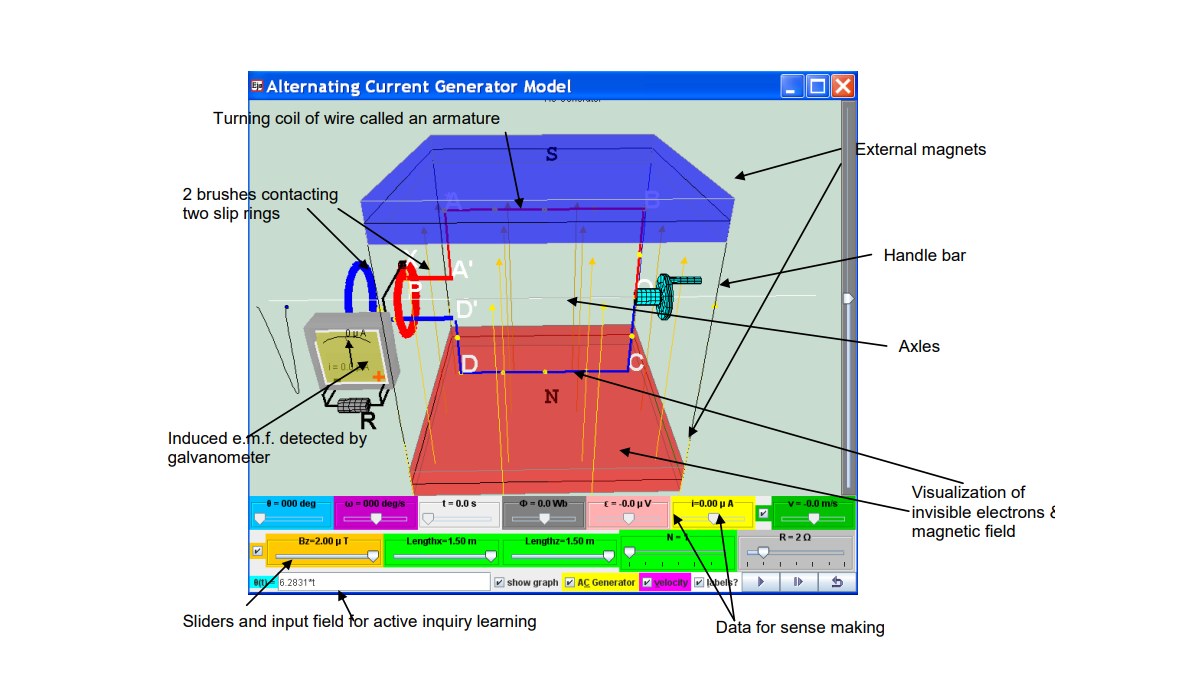
Electromagnetic induction is conceptually dense because learners need to coordinate motion, magnetic field change, induced current, and direction. This paper supports a blended approach where simulation, discussion, and classroom tasks work together.
Use It Tomorrow
Let students vary magnet speed, coil turns, or field orientation in a simulation before discussing Faraday's and Lenz's laws.
Pedagogical Move
Ask students to predict the direction first, test it, then explain any mismatch between prediction and result.
Student Agency
Frame the task so students work like young scientists: they choose or justify the variable to test, make a prediction, collect evidence, defend a claim, and decide how to improve the model or investigation.
Discussion Prompts
- What evidence does the model, video, or activity make visible?
- Which variable should students change first, and what should they keep constant?
- What claim can students make from the evidence, and what limitation should they acknowledge?
Reveal suggested answers
- Evidence: The blended activity makes coil motion, magnetic field change, induced current, direction, and linked representations visible.
- Variable: Change the motion of the magnet or coil first; keep the circuit, magnet strength, orientation, and observation method fixed.
- Claim: Students can claim that changing magnetic flux induces current, while acknowledging that direction and magnitude depend on the setup and rate of change.