arXiv:1408.3803
Vernier caliper and micrometer computer models using Easy Java Simulation and its pedagogical design feature-ideas to augment learning with real instruments
Measurement models for vernier calipers and micrometers
EJSMeasurementVernier CaliperMicrometer
Research Digest
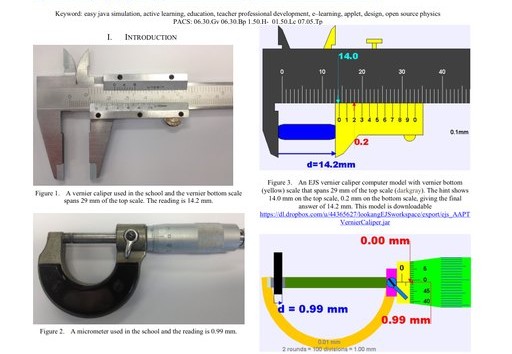
This paper shows how virtual instruments can prepare students for real measurement. The main design ideas are simple views, hints and answers, scale options, zero error, and assessment feedback.
Use It Tomorrow
Let students practise reading the virtual scale first, then immediately use the real instrument. Ask them to state reading, unit, precision, and zero-error correction.
Pedagogical Move
Use the model to surface common reading errors before the practical session.
Student Agency
Frame the task so students work like young scientists: they choose or justify the variable to test, make a prediction, collect evidence, defend a claim, and decide how to improve the model or investigation.
Discussion Prompts
- What evidence does the model, video, or activity make visible?
- Which variable should students change first, and what should they keep constant?
- What claim can students make from the evidence, and what limitation should they acknowledge?
Reveal suggested answers
- Evidence: The model makes the main scale, vernier or thimble scale, zero error, precision, and final corrected reading visible before students handle real apparatus.
- Variable: Change the object size or zero-error setting first; keep the instrument type, unit, least count, and reading procedure fixed.
- Claim: Students can claim a measured value with unit and correction, while acknowledging possible reading error, parallax, or instrument precision limits.